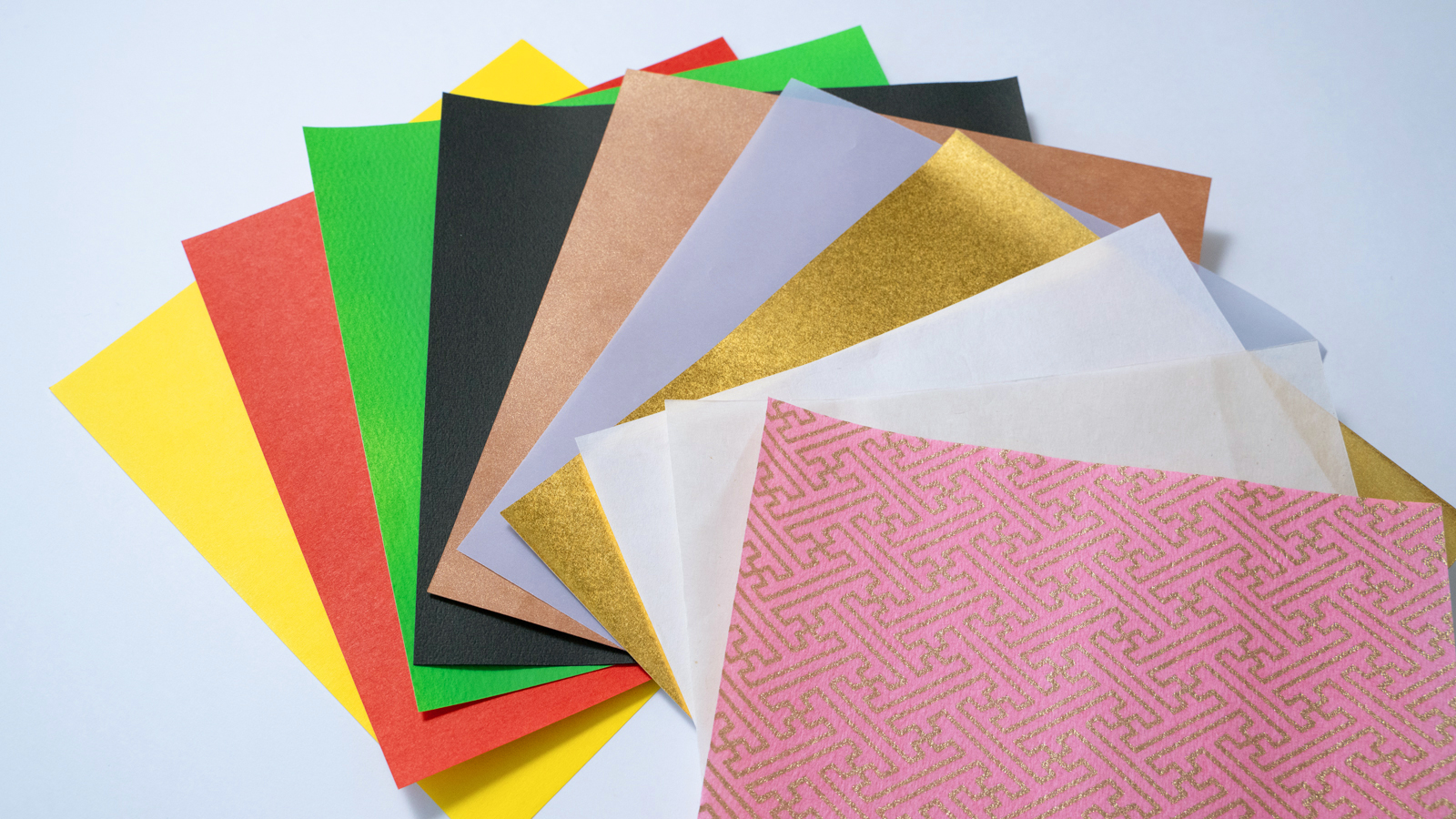
The best paper for origami depends on what you are folding. Standard kami is an excellent place to begin, but a complex insect, a sturdy box, and a decorative display piece need very different qualities from their paper.
This guide compares 11 useful types of origami paper, from inexpensive practice sheets to Japanese fine papers and washi. Use the table below to narrow your choices, then read the detailed notes for each paper.
Paper | Best for | Main advantage | Main limitation |
|---|---|---|---|
Kami | Beginners, practice, traditional and intermediate models | Thin, affordable, and easy to crease | Can lack strength for sculptural display pieces |
Kraft paper | Boxes, geometric forms, large prototypes | Strong, economical, and available in large sheets or rolls | Heavy grades become bulky in detailed models |
First Vintage | Display pieces, flowers, modular origami | Distinctive muted colors and kraft-like character | More expensive and often heavier than kami |
Tant | Modular origami, tessellations, flowers, display models | Large color range and a subtle textured surface | Thicker versions resist tightly layered folds |
Mermaid | Roses, boxes, cards, lampshades, sculptural forms | Beautiful wave-like texture and strong visual presence | Even the lightest standard grade is heavier than kami |
t-Karape | Complex models and handmade composite papers | Extremely thin, reducing bulk in layered areas | Delicate and difficult to fold neatly by itself |
Tracing or glassine paper | Window ornaments, lamps, translucent geometric models | Lets light pass through and reveals overlapping layers | Some products crack or show stress marks when refolded |
Hi-Pika E2F | Festive ornaments and metallic subjects | Refined matte gold or silver surface | Scratches, wrinkles, and strong reflections can be visible |
Ganpi paper | Detailed models and refined display work | Thin, smooth, and strong | Expensive and variable between handmade sheets |
Mitsumata paper | Organic forms and softly shaped display work | Smooth, warm surface with a softer folding feel | Thickness and behavior vary by maker |
Chiyogami | Cranes, boxes, seasonal decorations, gifts | Decorative patterns create an immediate finished look | Patterns can hide creases and fine details |
If you are new to origami, begin with 15 × 15 cm kami. For a complex model, use a larger and thinner sheet. For boxes, modular work, or display pieces, consider a paper with more body, such as kraft paper, Tant, or a light grade of First Vintage or Mermaid.
Paper names alone do not guarantee a particular folding behavior. The same product family may be sold in several weights, and handmade washi varies from sheet to sheet. Check the actual gsm, thickness, surface, and grain direction before buying a large quantity.
For a deeper explanation of size, gsm, thickness, and stiffness, read the Origami Paper Size & GSM Guide.
1. Kami: The Best All-Purpose Paper for Beginners
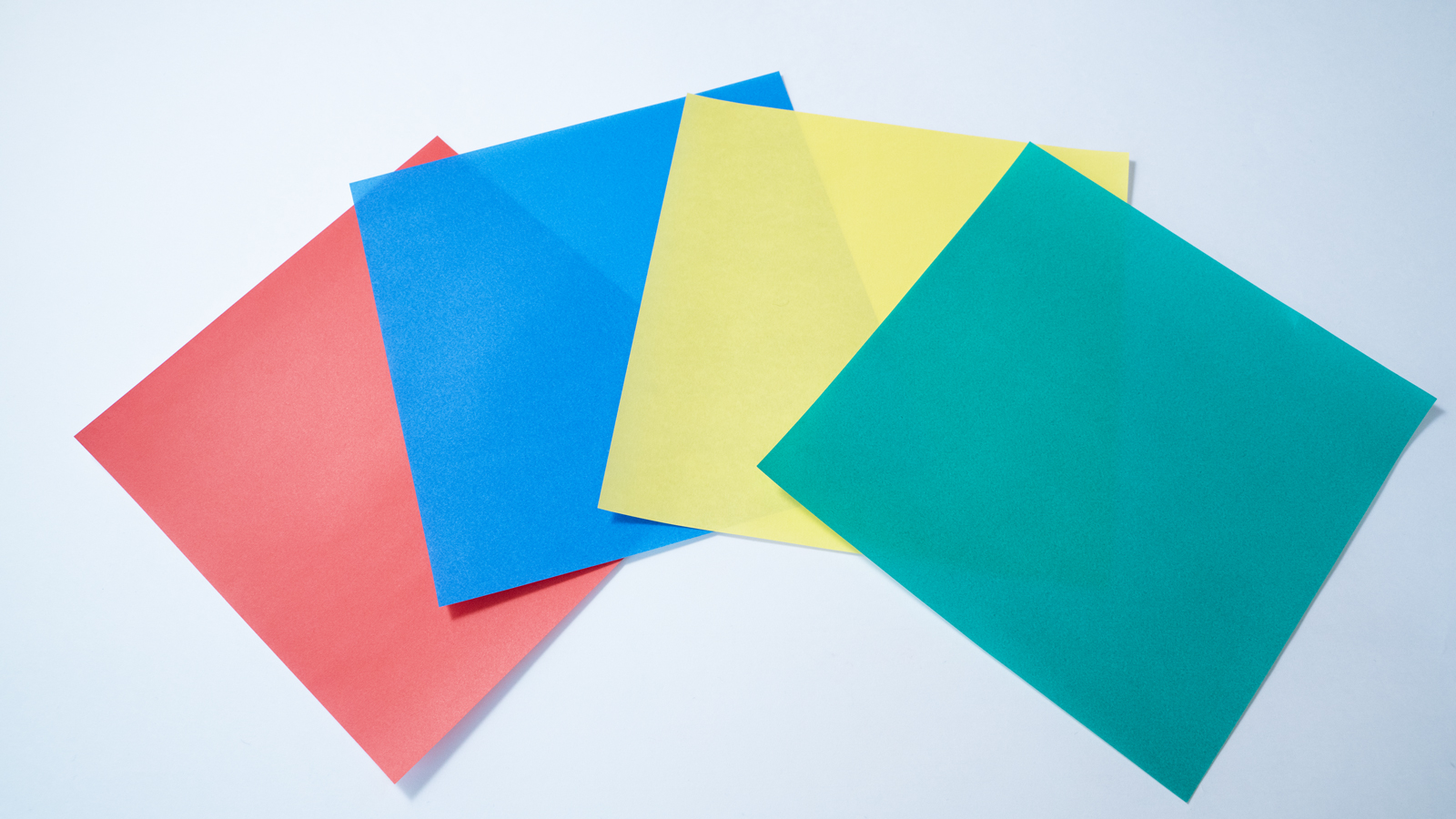
Kami is the familiar square paper sold specifically for origami. A typical sheet has color on one side and white on the other, although double-sided colors and printed patterns are also widely available.
The most common size is 15 × 15 cm, or about 6 × 6 inches. Representative kami is around 60 gsm and approximately 0.07 mm thick, making it light enough for repeated folds while remaining easy to control.
Why use kami?
- It takes creases easily and is forgiving during practice.
- It is inexpensive and available in many colors and sizes.
- Its thinness works well for traditional and moderately detailed models.
- The different colors on the front and back support models with color changes.
What should you watch for?
Low-cost sheets may scuff, wrinkle, or lose surface color after repeated handling. Kami can also feel too light for a large model or a three-dimensional piece that must hold its shape for display.
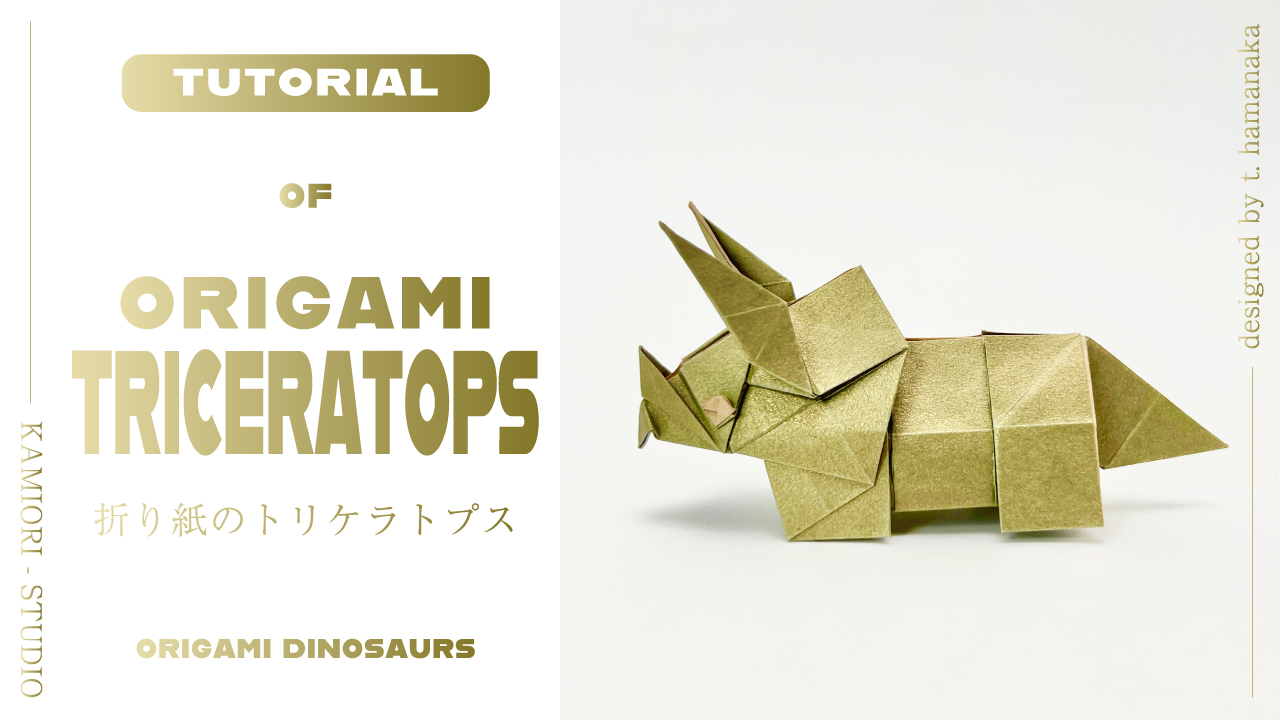
Best for: cranes, flowers, stars, shuriken, beginner animals, practice folds, and intermediate models without extreme layer buildup.


Works Made with This Paper
2. Kraft Paper: Strong and Practical for Large or Structural Models
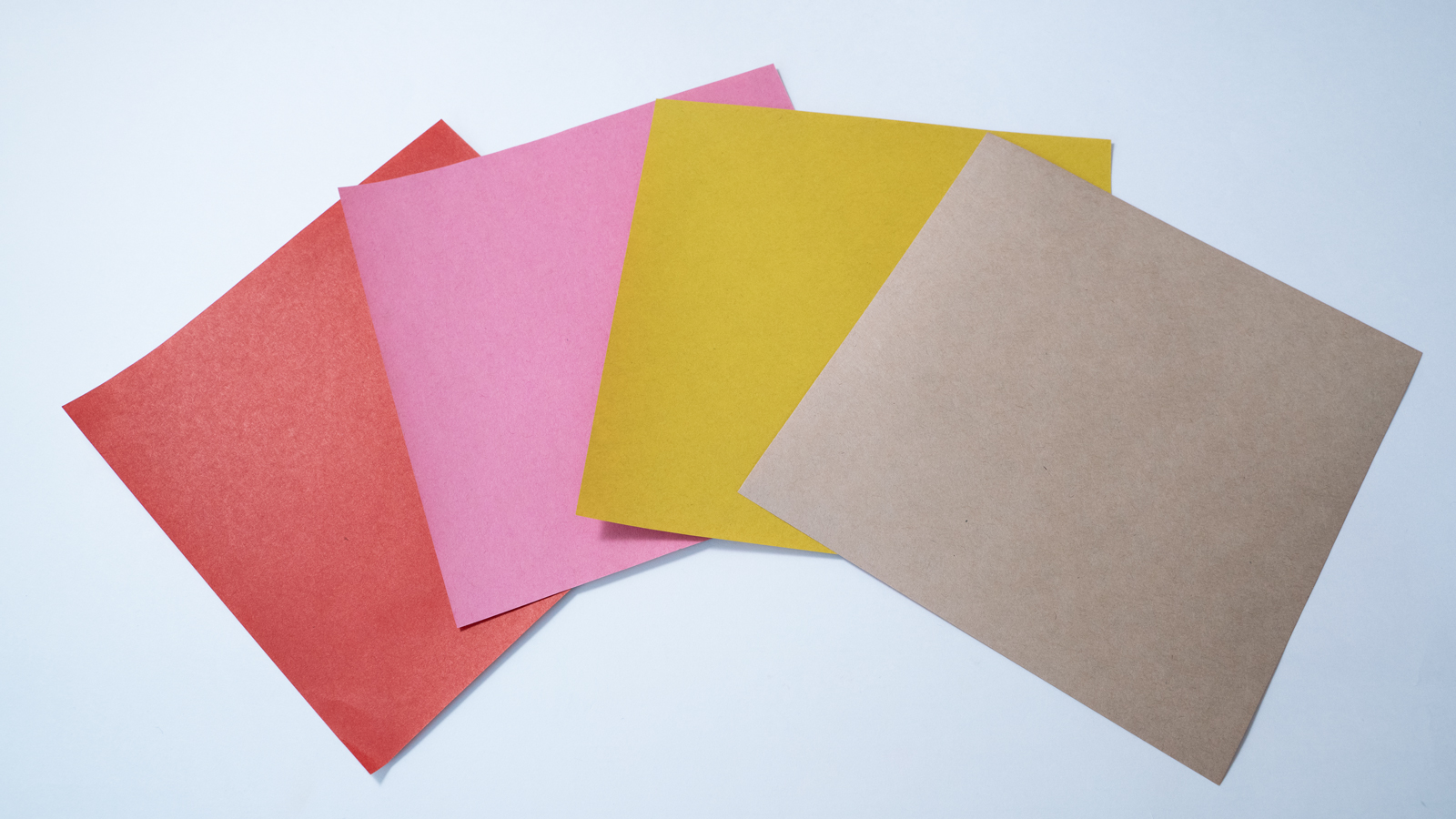
Kraft paper is commonly associated with brown wrapping and packaging, but it is available in several colors, weights, sheets, and rolls. Its natural surface gives models a simple, material-focused appearance.
Kraft paper can be useful when you need strength, a large working area, or an inexpensive material for testing scale. A roll makes it possible to cut squares much larger than standard origami packs.
Why use kraft paper?
- It is strong and resists tearing during broad folds.
- It gives boxes and geometric forms useful body and stiffness.
- Large sheets and rolls are relatively easy to obtain.
- The natural brown color works well for animals and architectural forms.
What should you watch for?
“Kraft paper” describes a broad family rather than one folding specification. Heavy packaging grades can become too stiff and bulky for complex origami. Test a small piece first, especially if the model includes sinks, closed folds, or many layers.
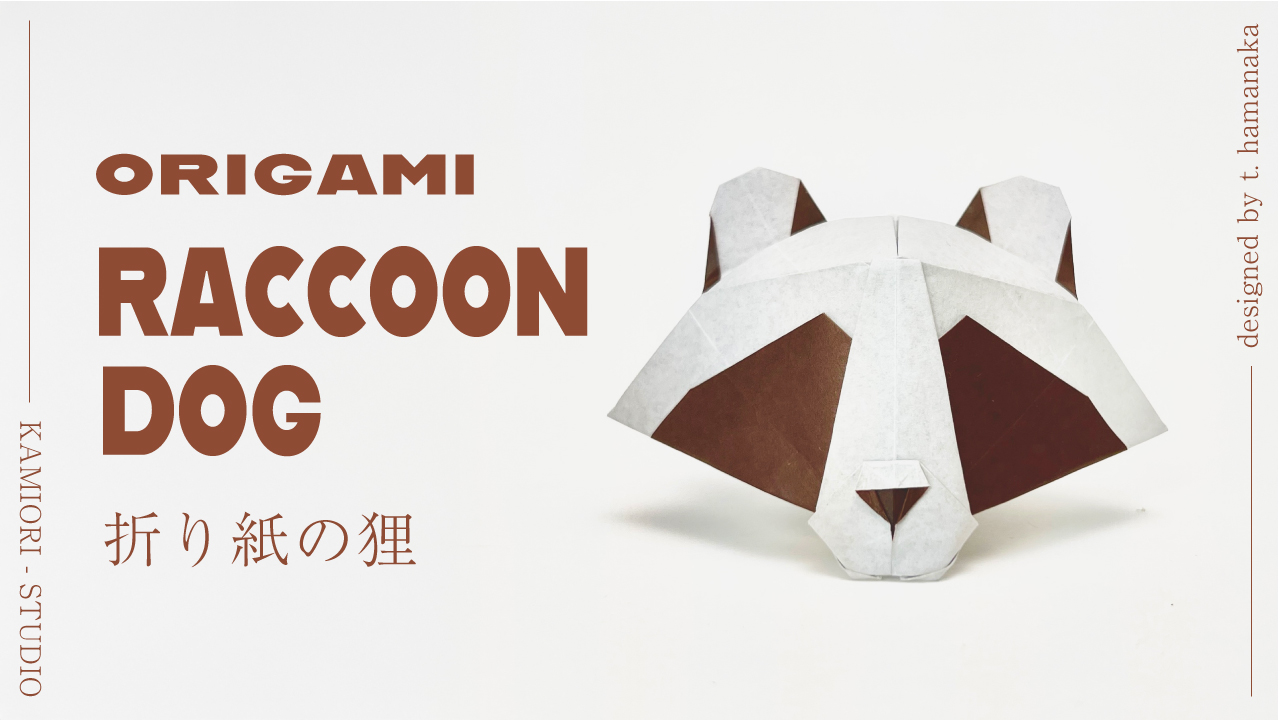
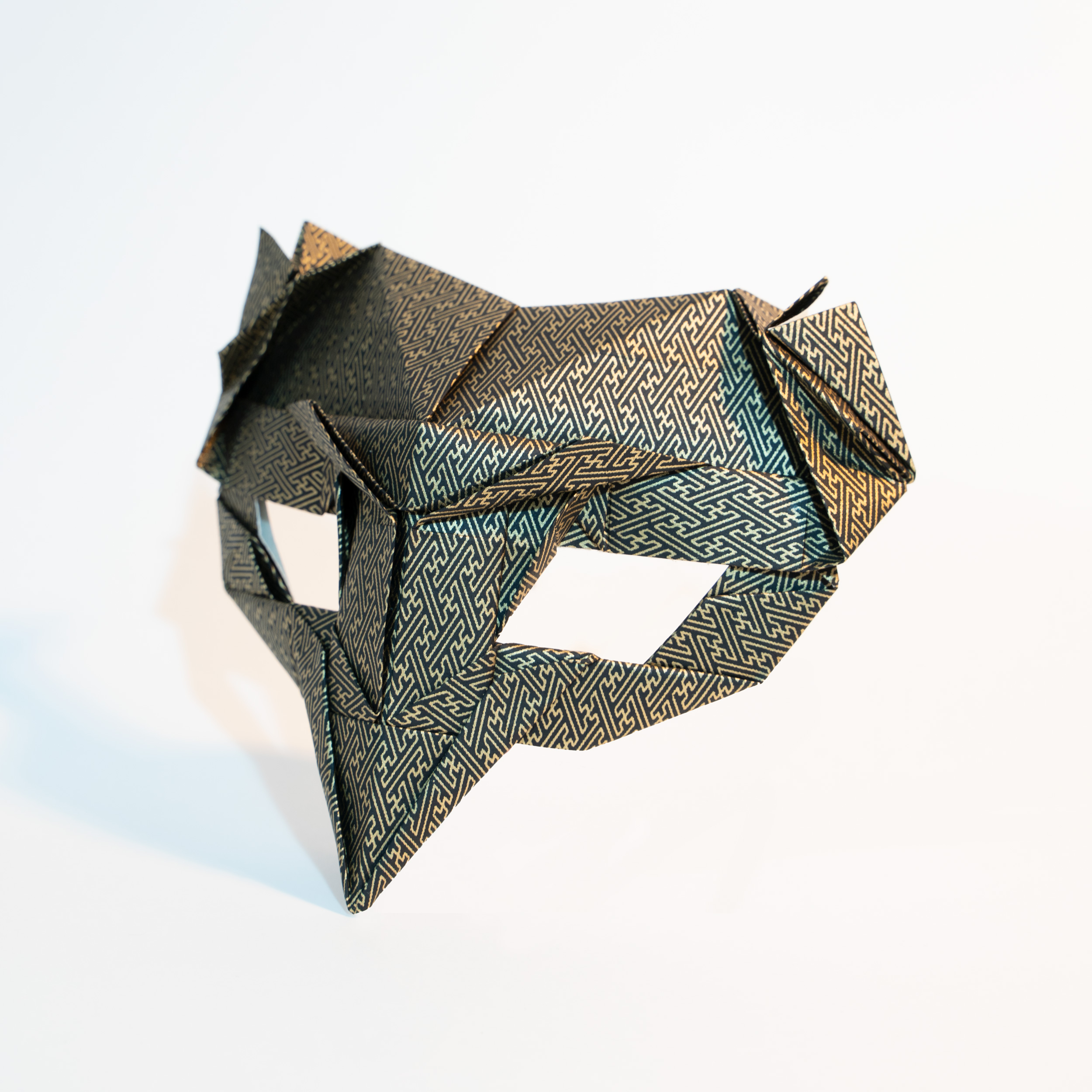
Best for: boxes, large animals, masks, geometric objects, structural prototypes, and large-scale practice.
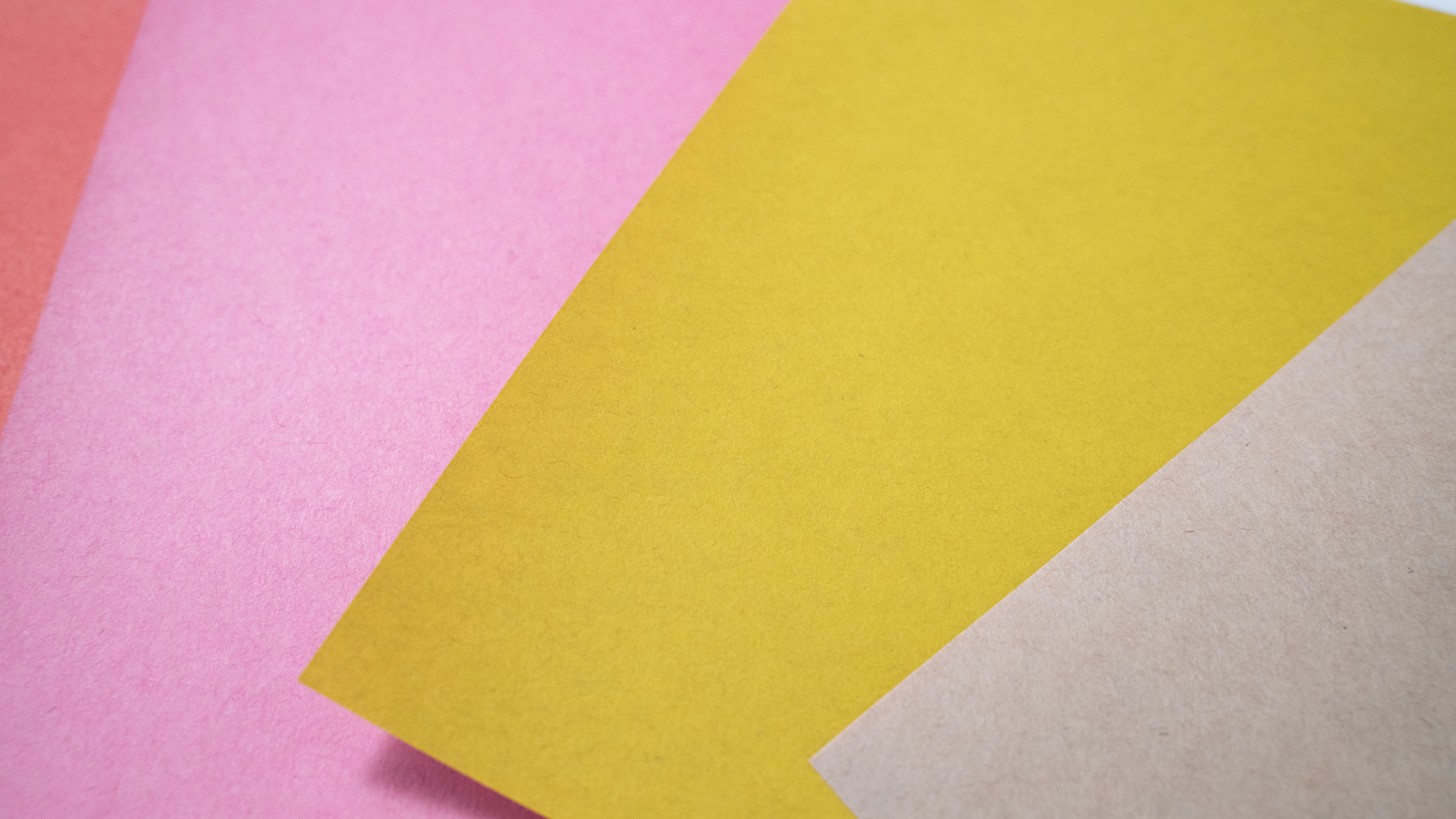


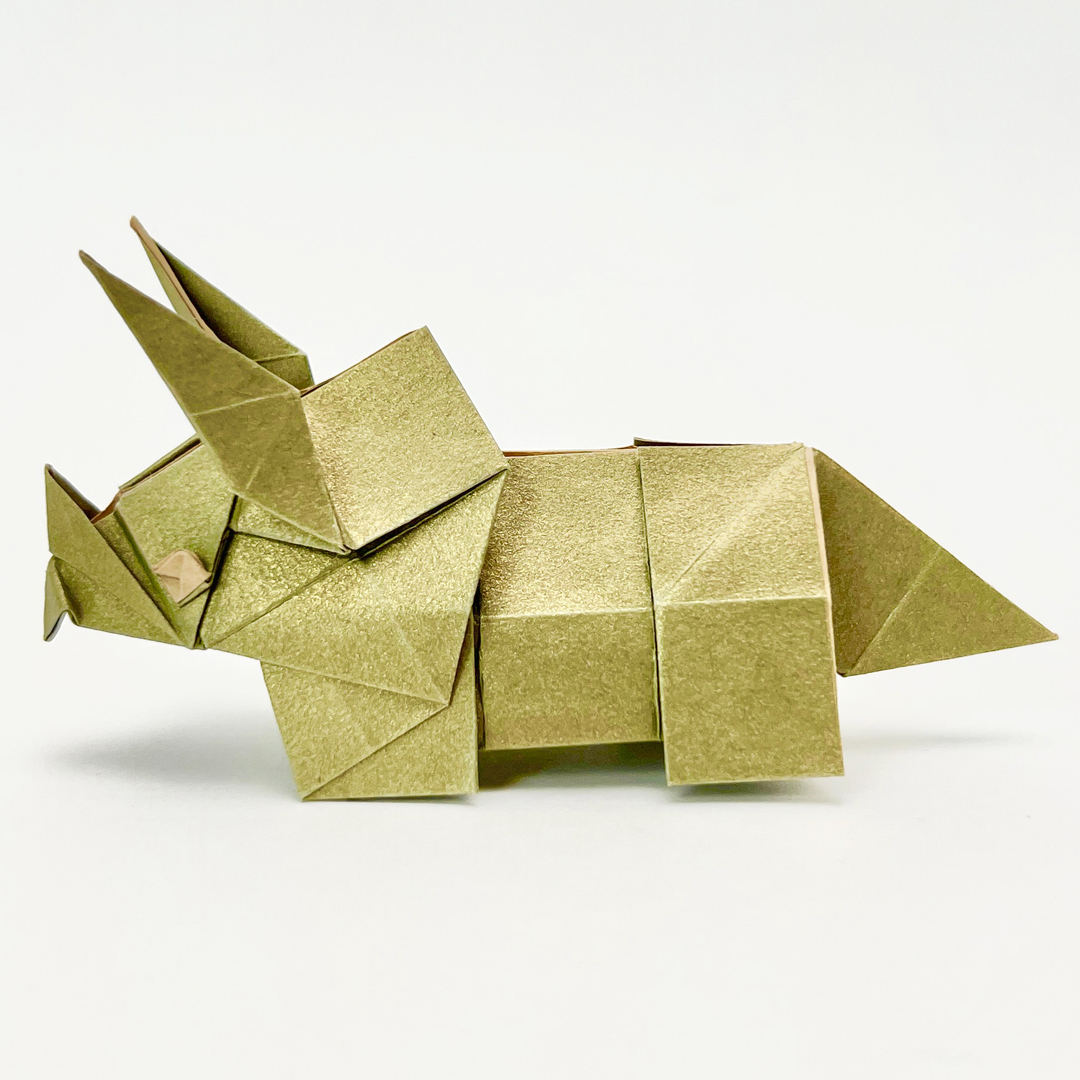
3. First Vintage: Muted Color and a Kraft-Like Texture
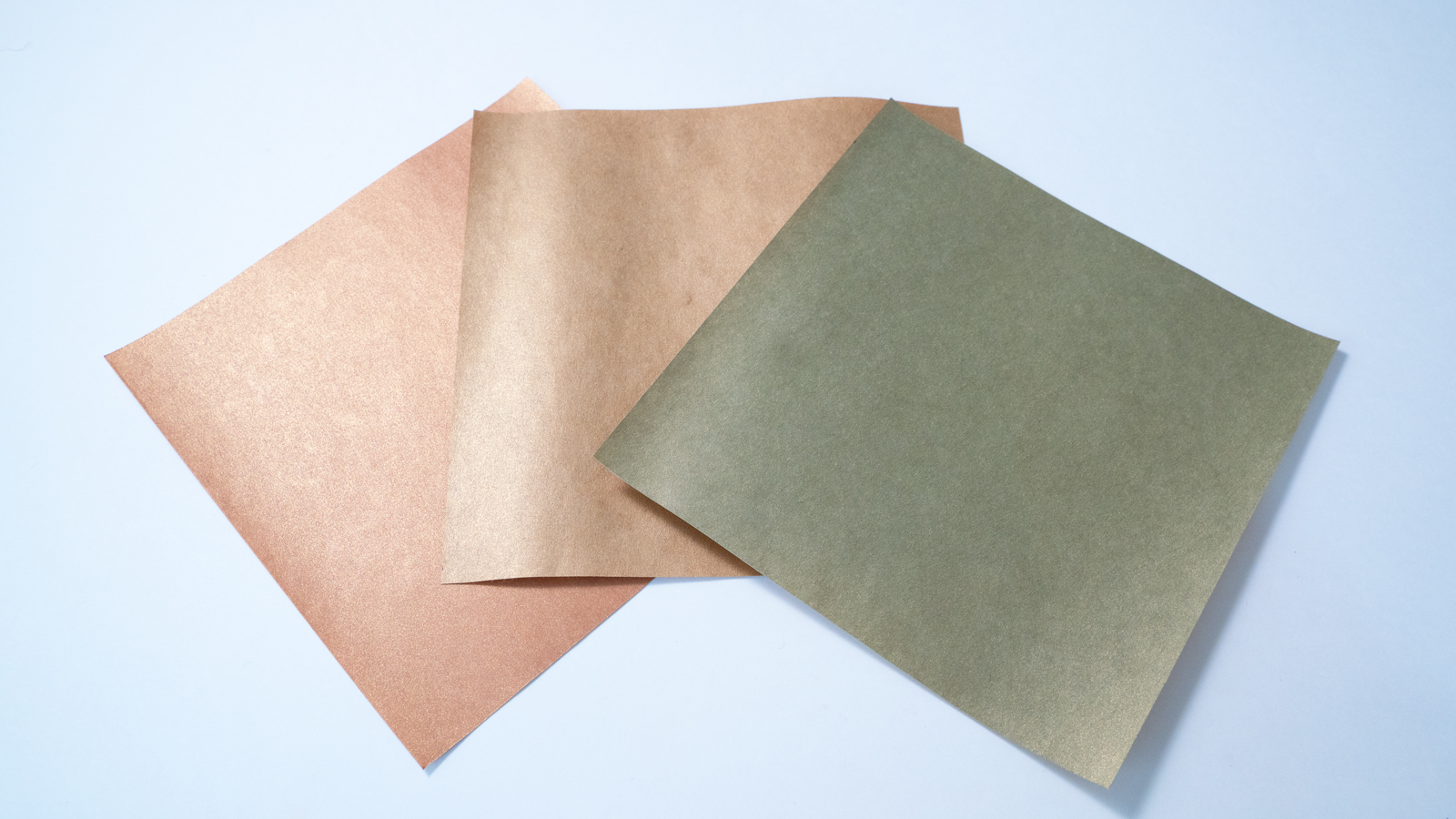
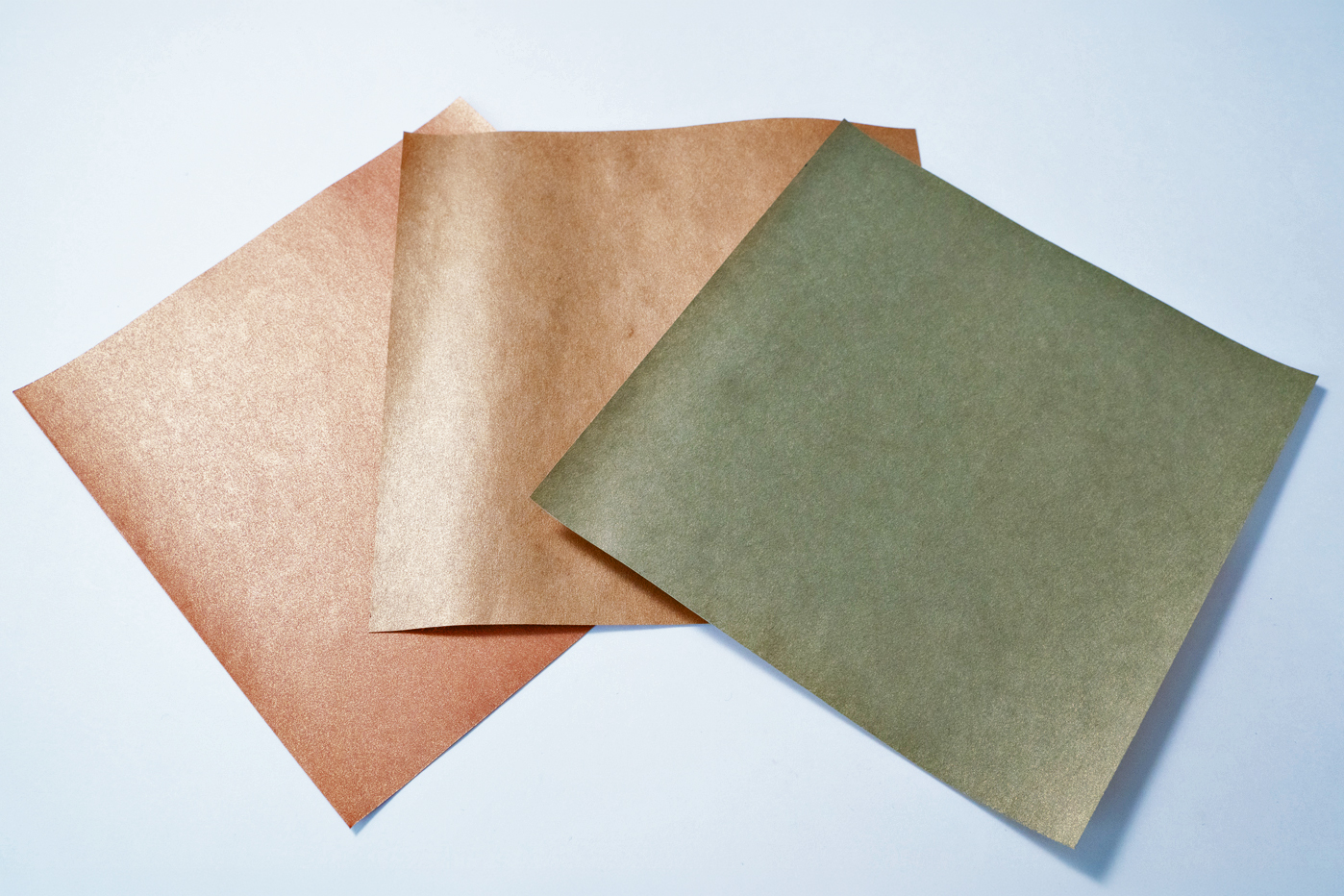
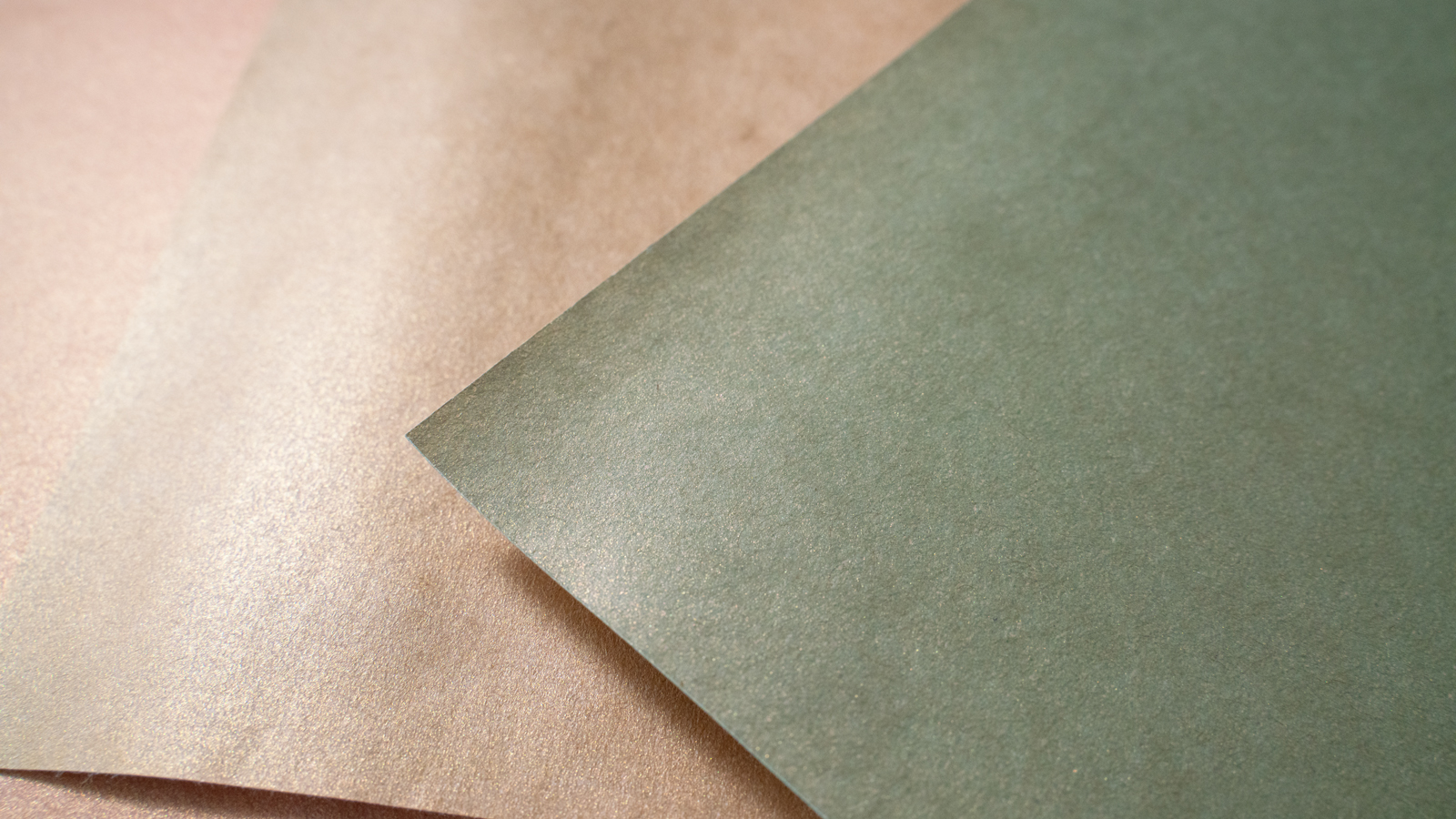
First Vintage is a Japanese fine paper based on kraft paper. TAKEO describes it as having aged-looking colors and the firm character associated with kraft. Its palette includes subdued tones such as turquoise, olive, cashmere, and blue gray.
The product is available in multiple weights. The lightest currently listed grade is approximately 65 gsm and 0.09 mm thick, while heavier grades are intended for printing, packaging, and other paper applications rather than detailed folding.
Why use First Vintage?
- Its muted colors give even simple models a refined appearance.
- The slightly textured, kraft-like surface adds visual depth.
- Lighter grades can provide more body than kami without feeling like cardstock.
What should you watch for?
Choose the weight carefully. The name identifies a product family, not a single thickness. Heavier sheets quickly become unsuitable for complex folding, and full sheets cost more than ordinary origami paper.
Best for: display cranes, flowers, envelopes, cards, modular units, and simple models that leave large areas of paper visible.
Works Made with This Paper
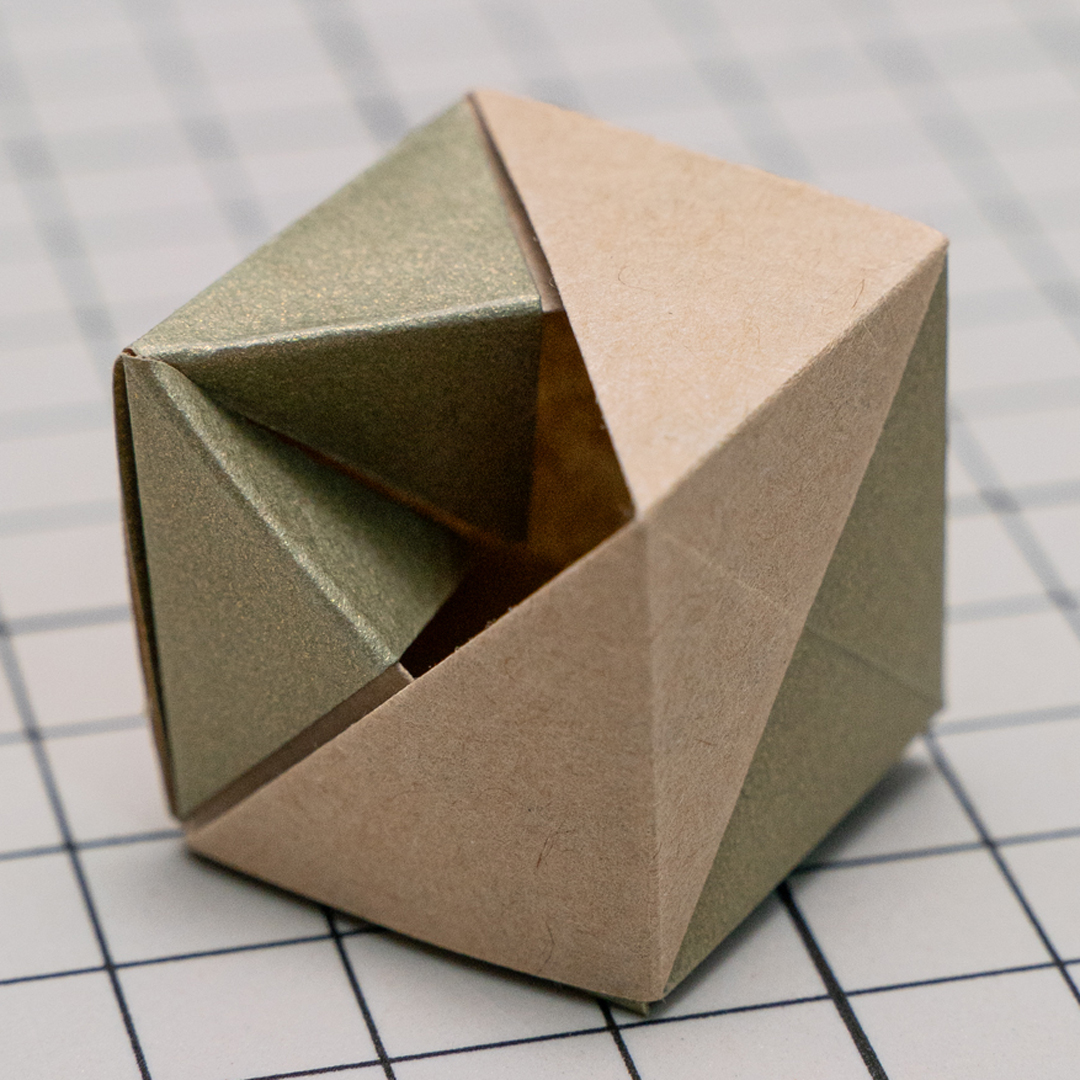
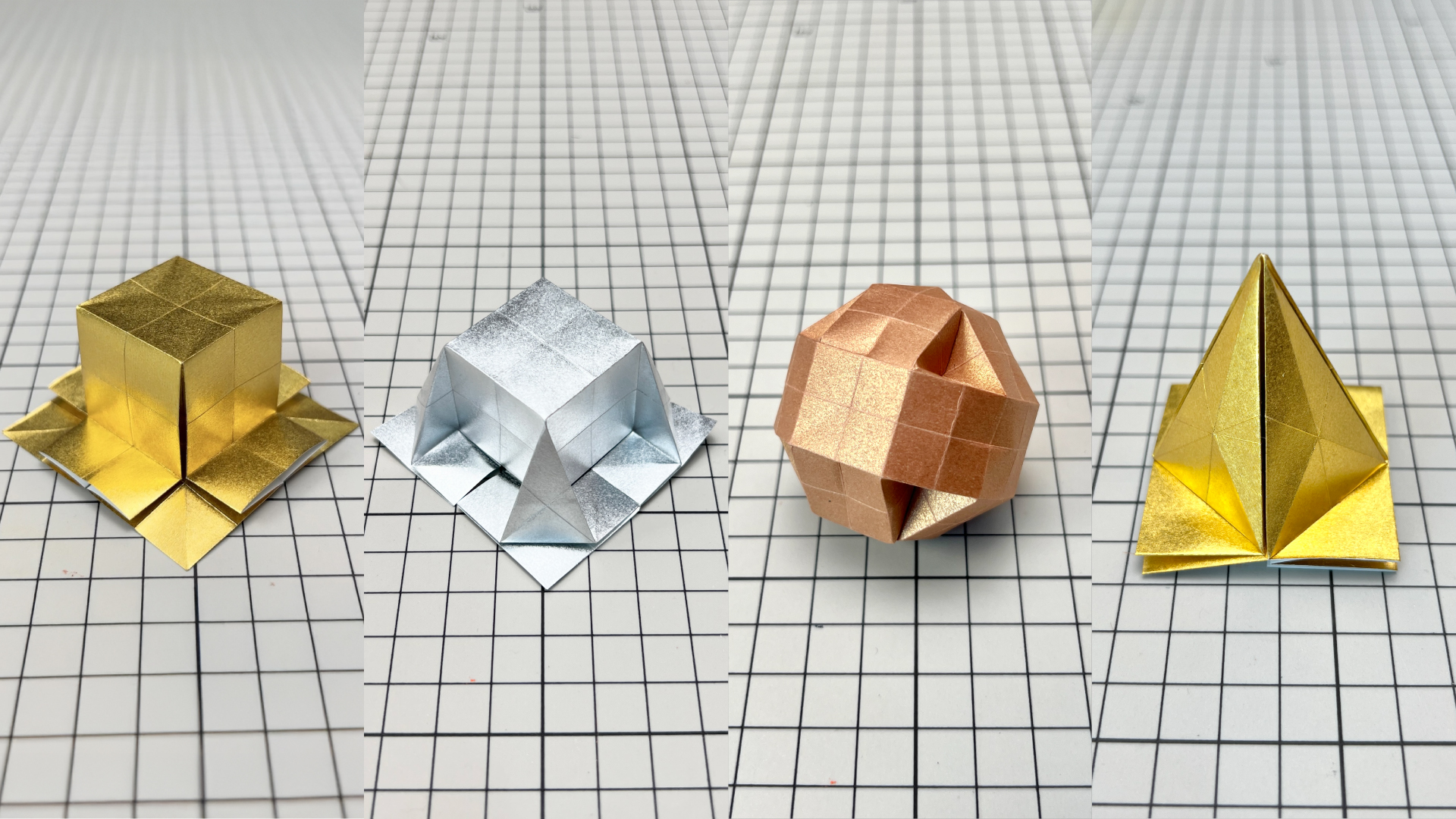
Corner-Truncated Cube
A cube constructed using a diagonal grid. Patterns appear across all surfaces, and openings are formed in certain areas. It combines easily with other structures, making it well suited for creating forms such as plants.
4. Tant: A Versatile Colored Paper for Modular and Display Origami
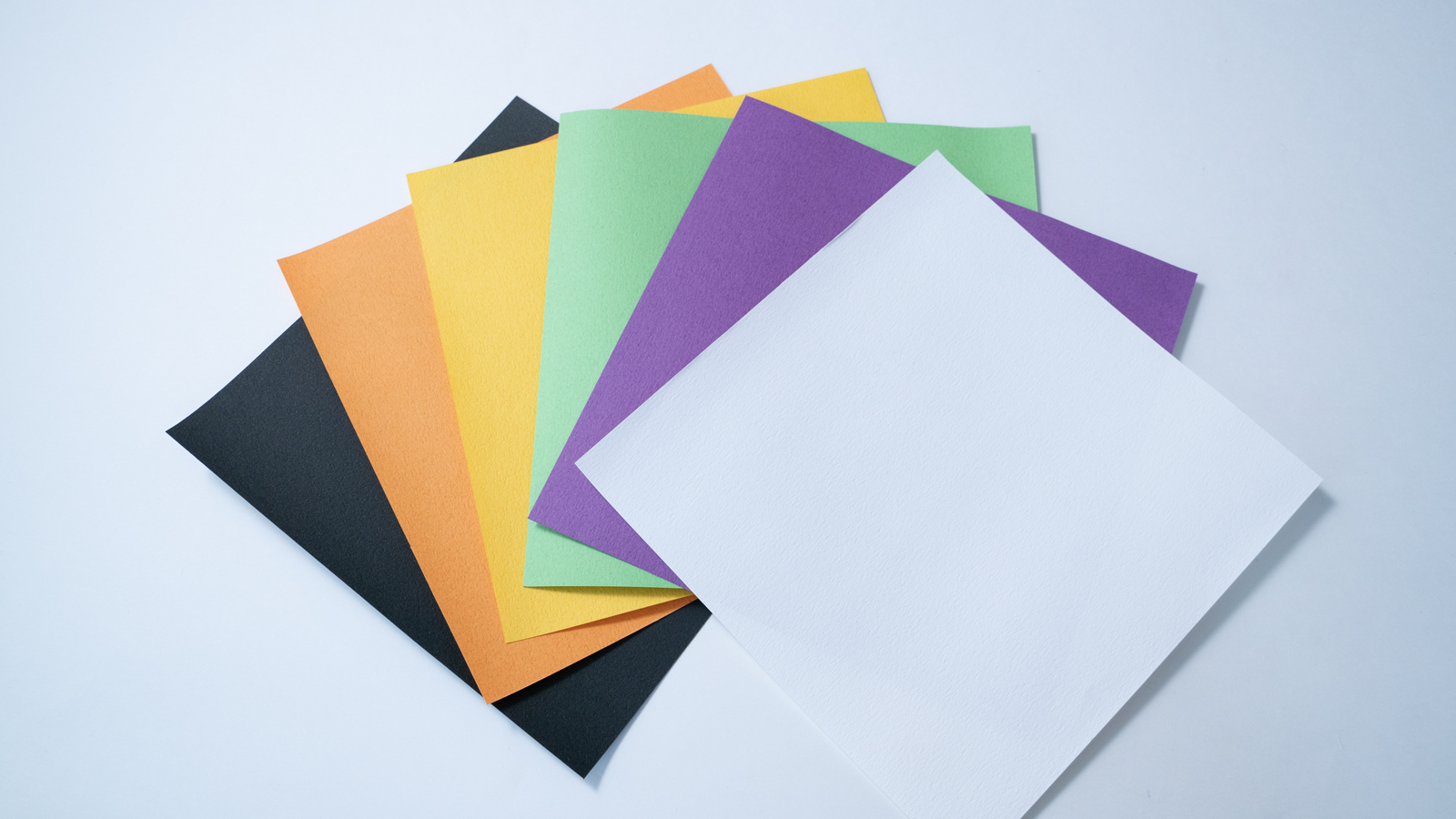
Tant is a Japanese fine-paper series known for its systematic palette of 200 colors and a subtle embossed texture. Origami-sized Tant packs are also sold by several suppliers.
Tant usually feels firmer and more substantial than kami. Both sides commonly present the same color, which creates a consistent finish for modular work and models that expose the reverse side unintentionally.
Why use Tant?
- The broad color range makes coordinated palettes easier to build.
- Its surface texture catches light without overwhelming the model.
- Its body helps modules, tessellations, and geometric surfaces stay crisp.
- It is available in convenient origami squares as well as parent sheets.
What should you watch for?
Tant is a series with different products and weights, so confirm the specification of the sheet you are buying. Thicker versions require more pressure to crease and may tear where many folds meet. Same-color sides are also unsuitable when a design depends on a strong front-and-back color change.
Best for: kusudama, modular origami, tessellations, flowers, geometric models, and display pieces.


5. Mermaid: Textured Paper for Sculptural and Decorative Work
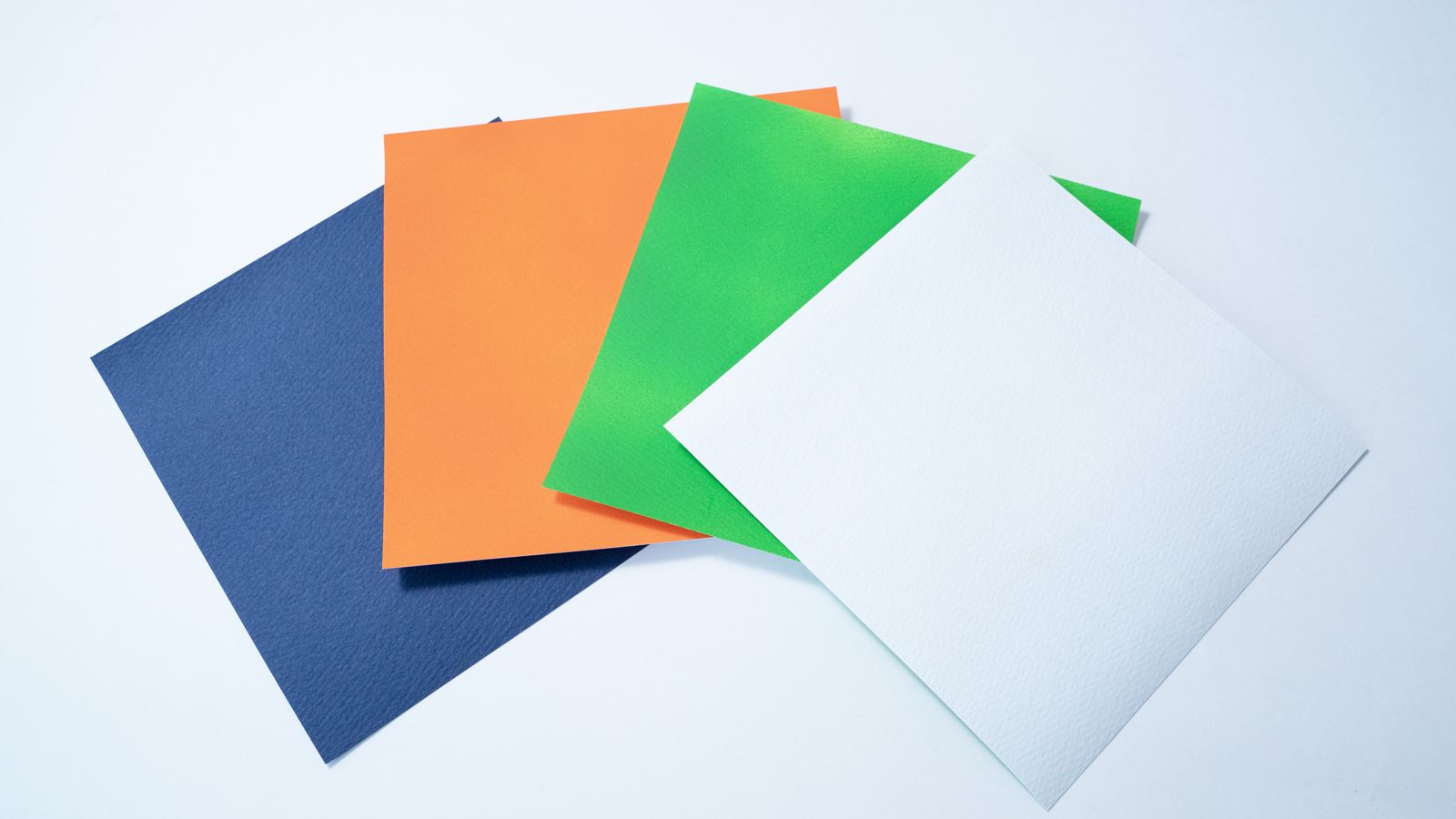
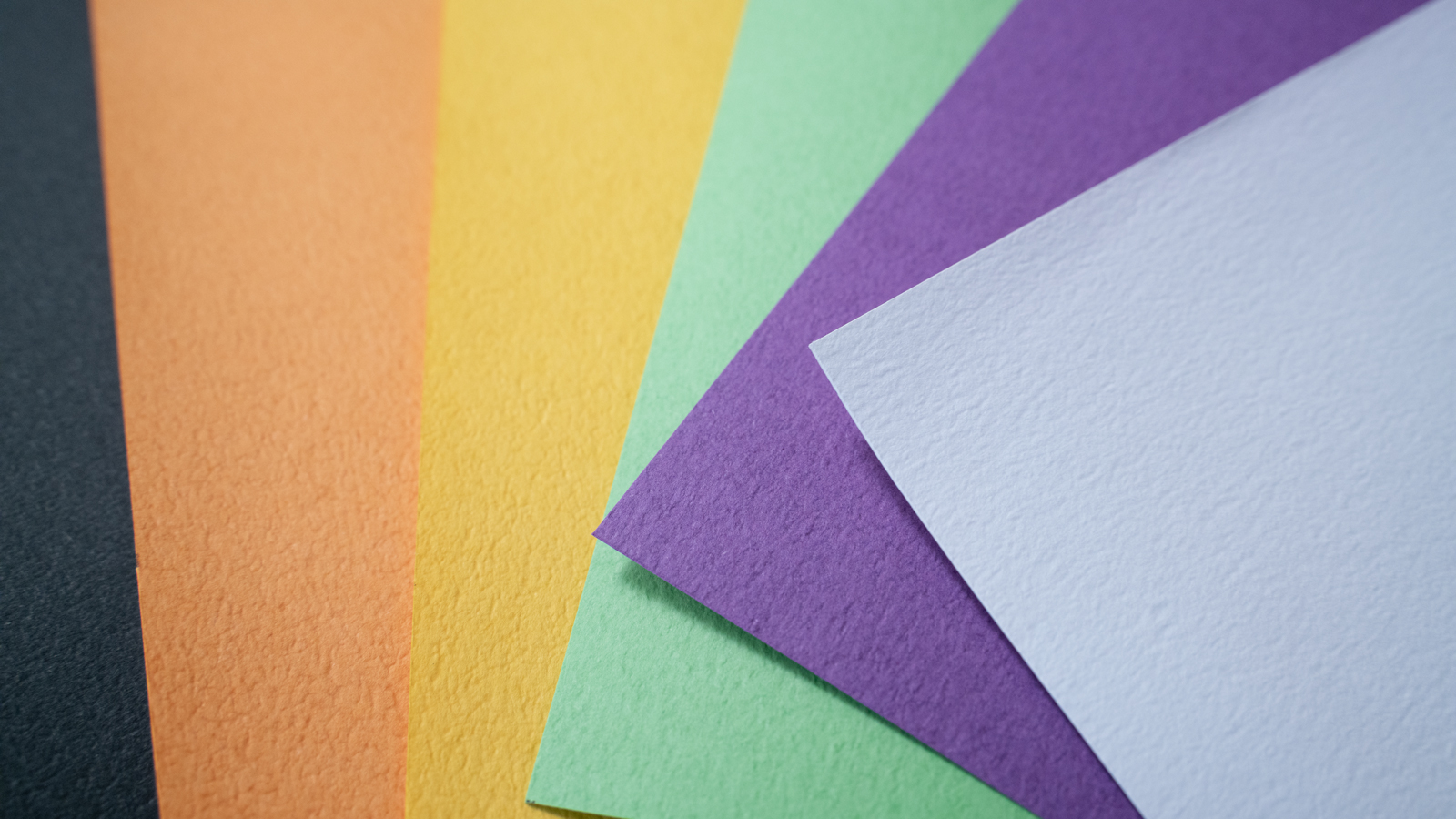
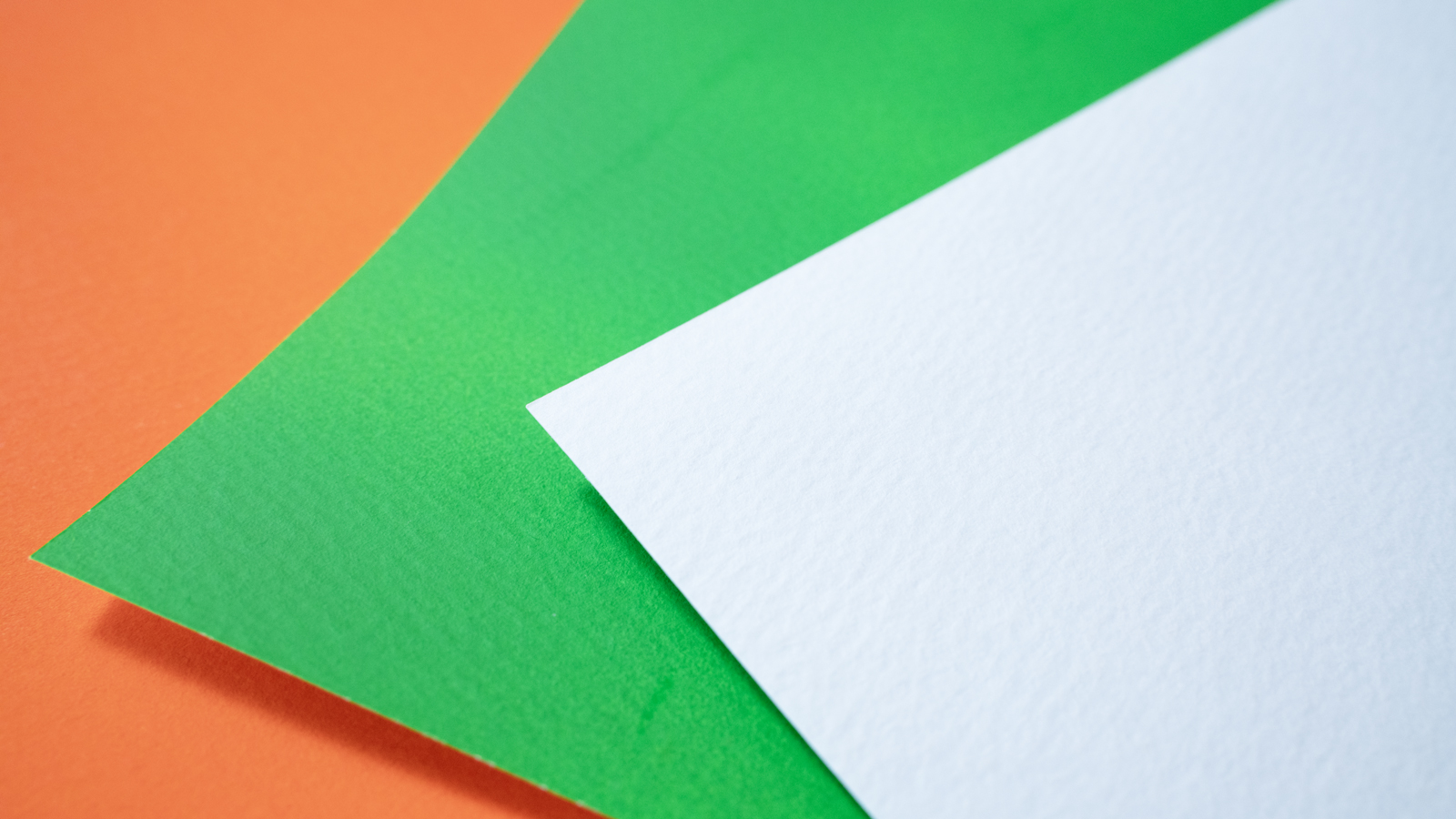
Mermaid is a Japanese fine paper with a felt-marked surface resembling small waves. This texture creates gentle highlights and shadows, giving folded surfaces a strong material presence.
TAKEO lists a wide range of colors and weights. The lightest standard grade is approximately 81 gsm and 0.13 mm thick, so even the light version has more body than typical kami.
Why use Mermaid?
- The paper itself adds texture and visual richness.
- It holds broad surfaces and three-dimensional forms well.
- The color range makes it useful for flowers, gifts, and display objects.
- Its durability suits models that will be handled or exhibited.
What should you watch for?
The textured surface can make fine crease lines harder to see. Heavy grades are unsuitable for dense layer buildup, and even the lightest grade works best with models designed for paper with some thickness.
Best for: roses, kusudama, boxes, card cases, lampshades, large geometric forms, and sculptural display pieces.
Works Made with This Paper
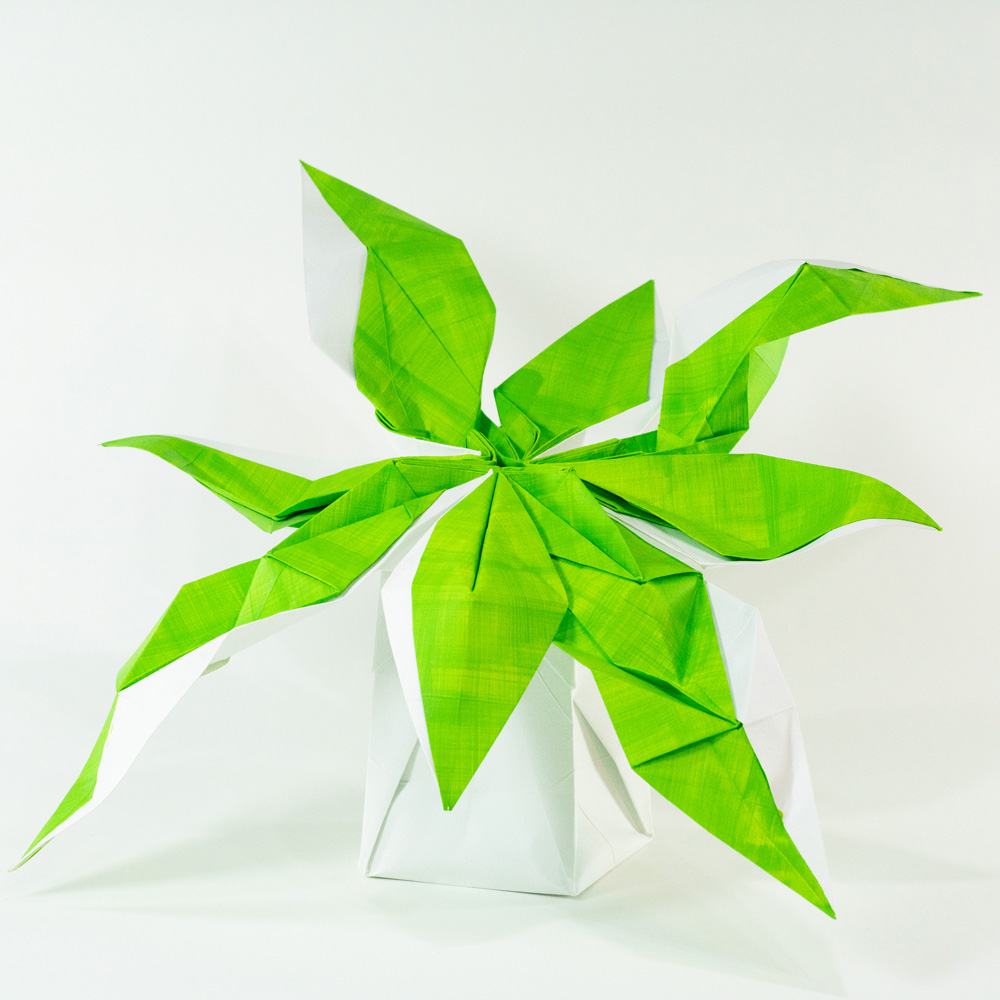
Plant
An abstract plant with eight large two-colored leaves spread outward.
6. t-Karape: Ultra-Thin Paper for Complex Models and Laminating
t-Karape is an extremely thin, one-side-glazed colored wrapping paper. TAKEO lists it at approximately 19 gsm and 0.04 mm thick, with 20 colors.
Its low weight makes it attractive for models with many overlapping layers. It is also used to make composite folding papers by bonding it to foil or another thin sheet. The result can combine a colored surface with extra shaping ability.
Why use t-Karape?
- It minimizes bulk in highly layered areas.
- It can preserve fine points and small details.
- Its color range makes it useful as the outer layer of homemade composite paper.
What should you watch for?
By itself, t-Karape is delicate, light, and easy to wrinkle or shift. It rewards careful handling and is not the simplest choice for a beginner. When laminating it, test the adhesive and drying method first to avoid bubbles, distortion, or unwanted stiffness.
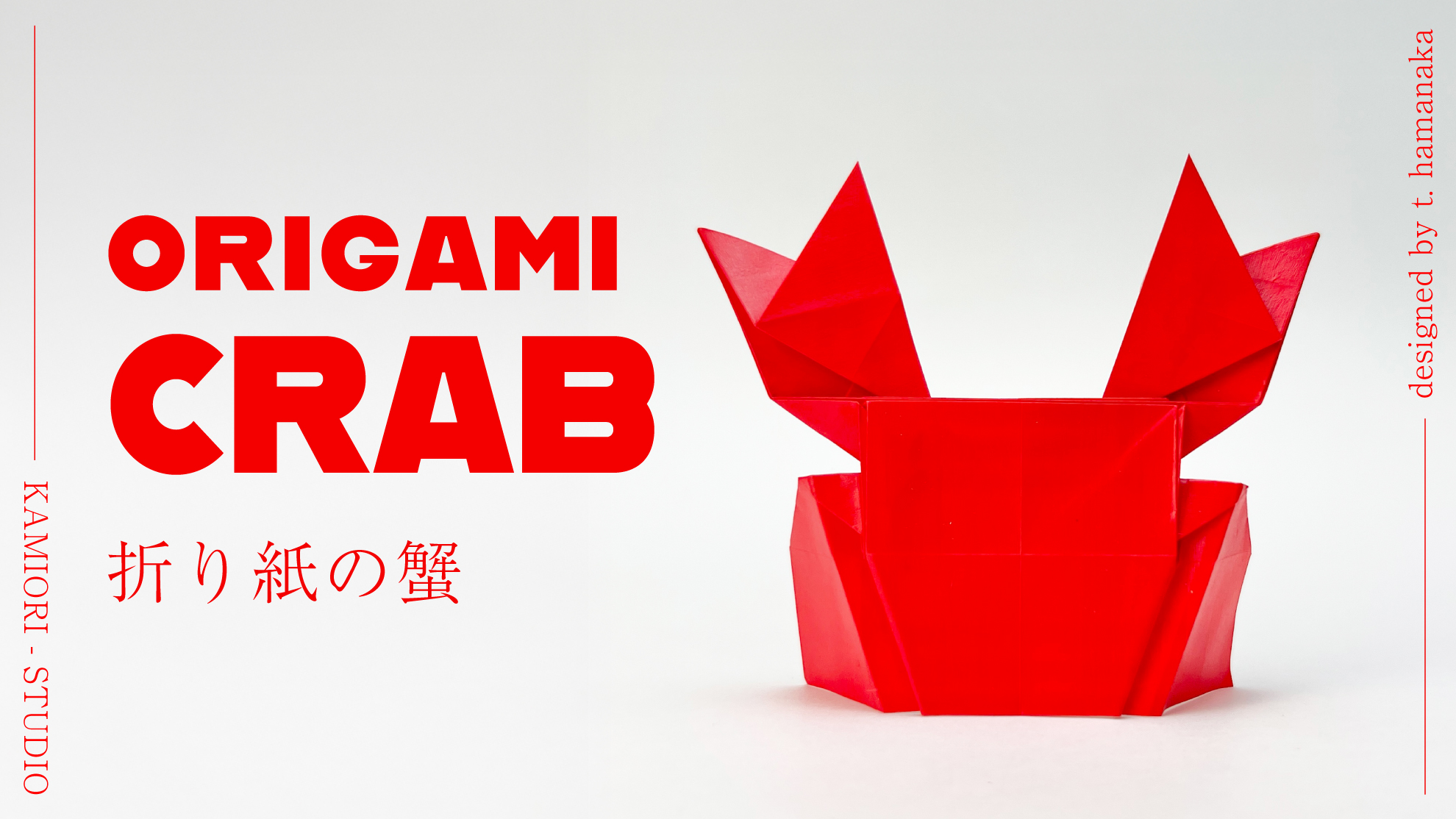
Best for: insects, figures, dragons, highly complex designs, and homemade tissue-foil-style papers.
7. Tracing Paper and Glassine: Translucent Paper for Light-Based Effects
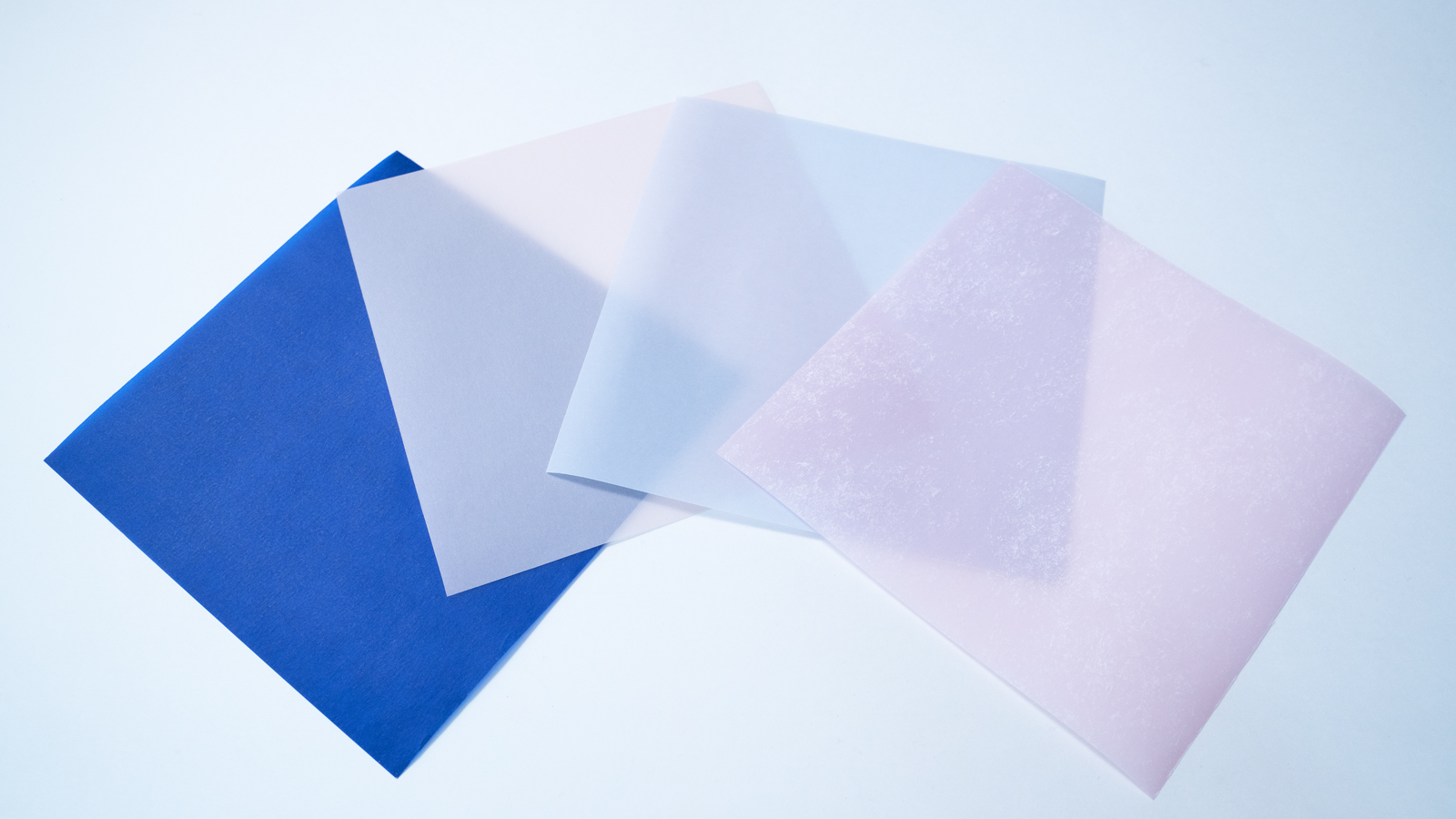
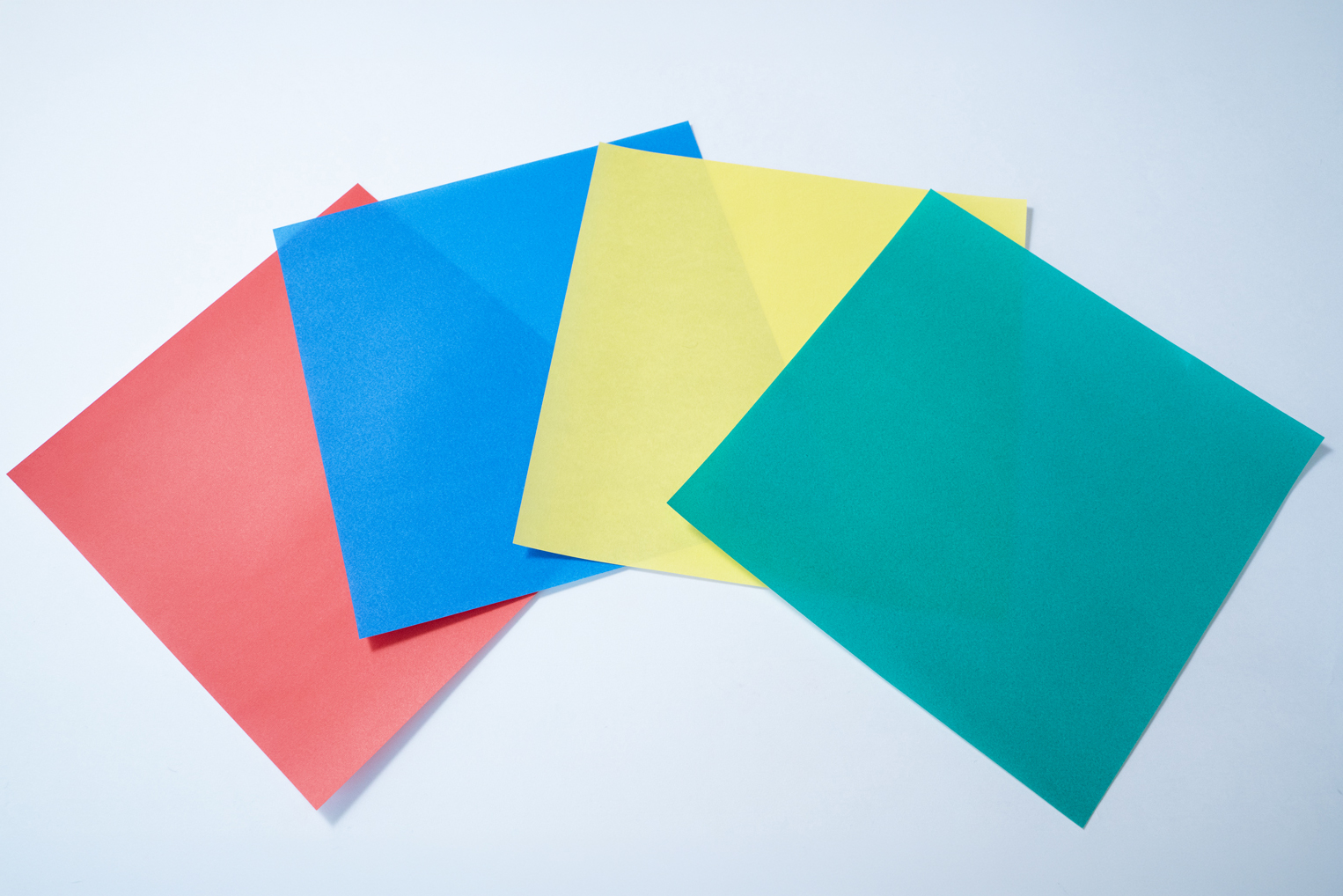
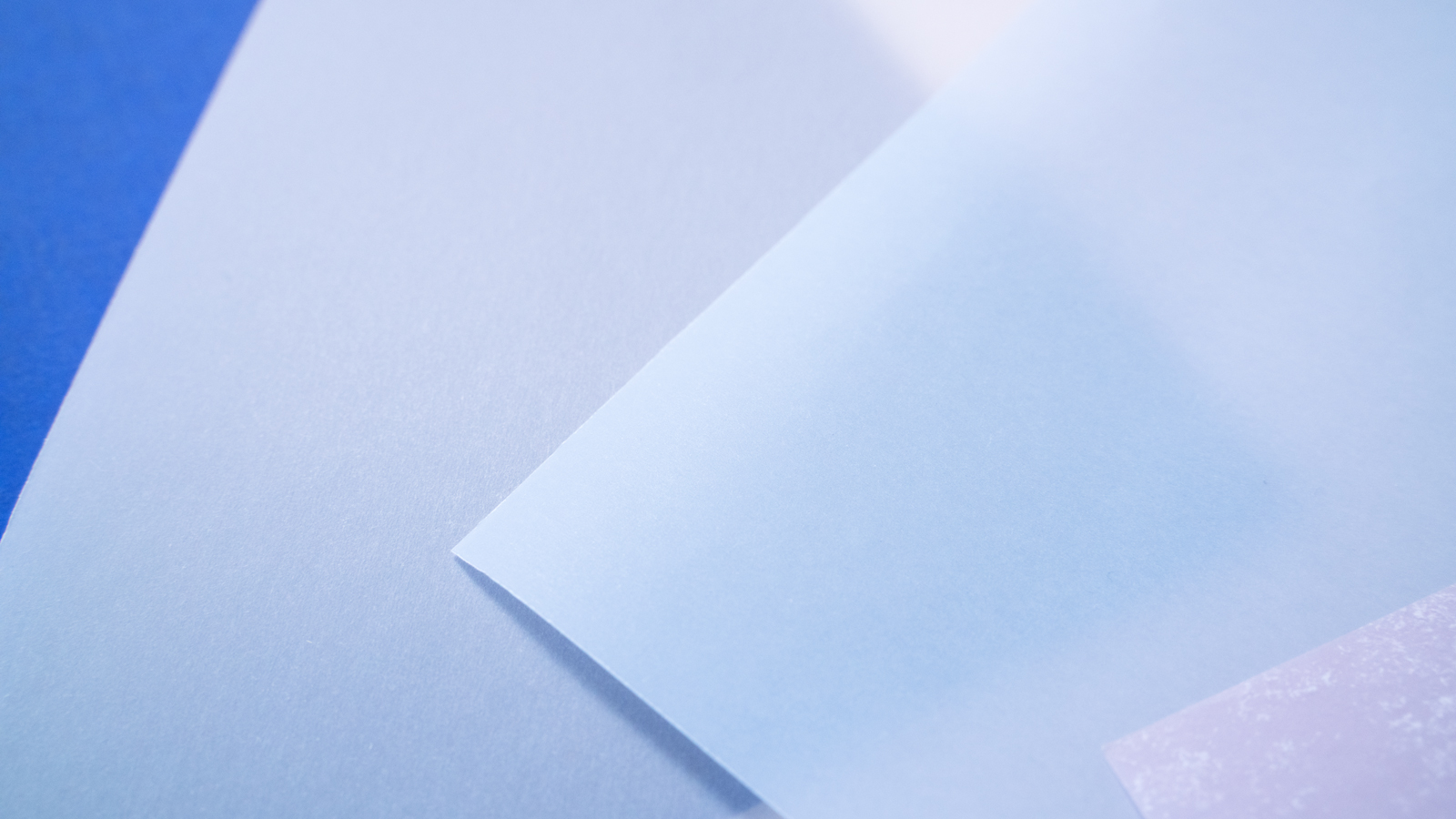
Tracing paper and glassine are translucent papers that reveal overlapping layers and allow light to pass through a folded model. They can transform a simple geometric design into a window ornament or lighting object.
These names cover many products. For example, TAKEO's Classico Tracing-FS is offered in several weights and colors. A light tracing paper may fold very differently from a heavier drafting sheet or food-grade glassine.
Why use translucent paper?
- Overlapping layers create changes in color and opacity.
- Crisp surfaces work well with geometric patterns.
- Finished pieces become especially effective when placed near a window or light source.
What should you watch for?
Some translucent papers crack, whiten, or show permanent stress marks when folded repeatedly in opposite directions. Smooth sheets can also slip during alignment. Test reverse folds and repeated creasing on an offcut before using an expensive sheet.
Best for: window decorations, lampshades, translucent cranes, stars, tessellations, and geometric ornaments.
Works Made with This Paper
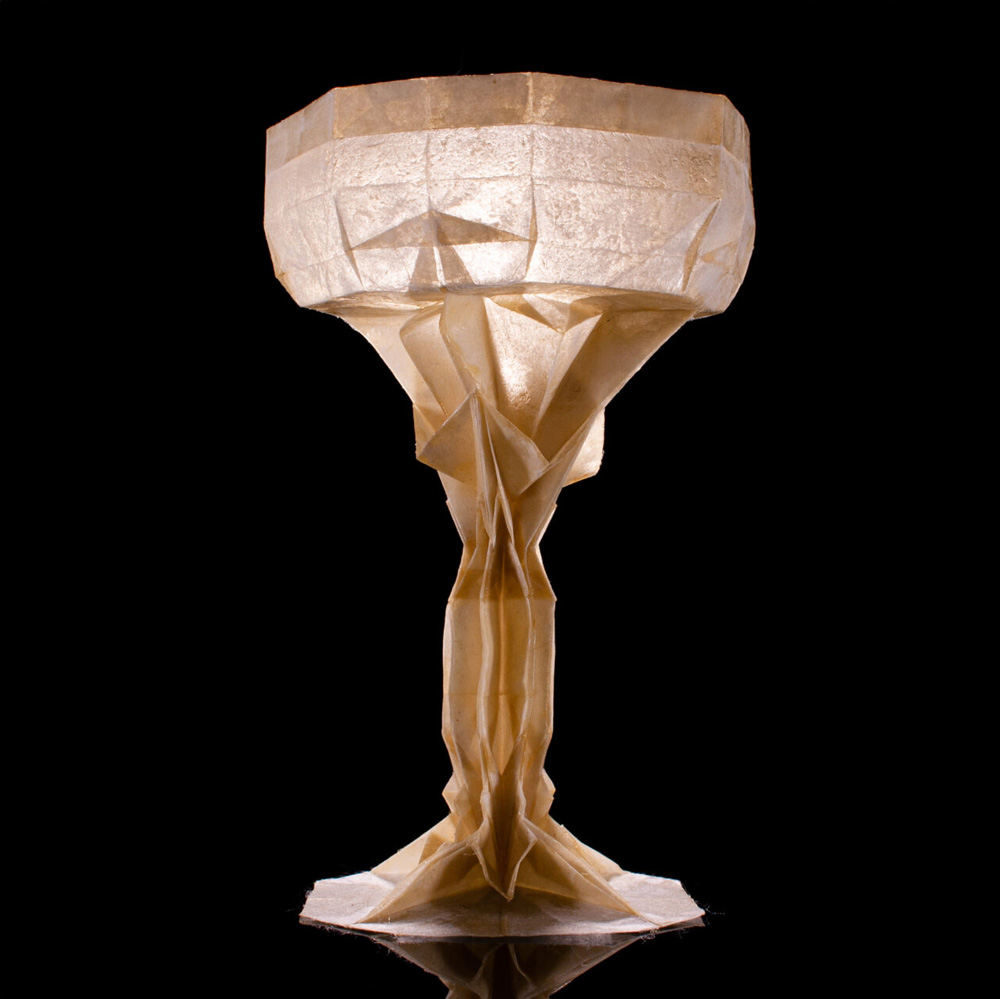
Wine Glass
A crystal wine glass with intricate detailing.
8. Hi-Pika E2F: Matte Metallic Paper for Decorative Origami
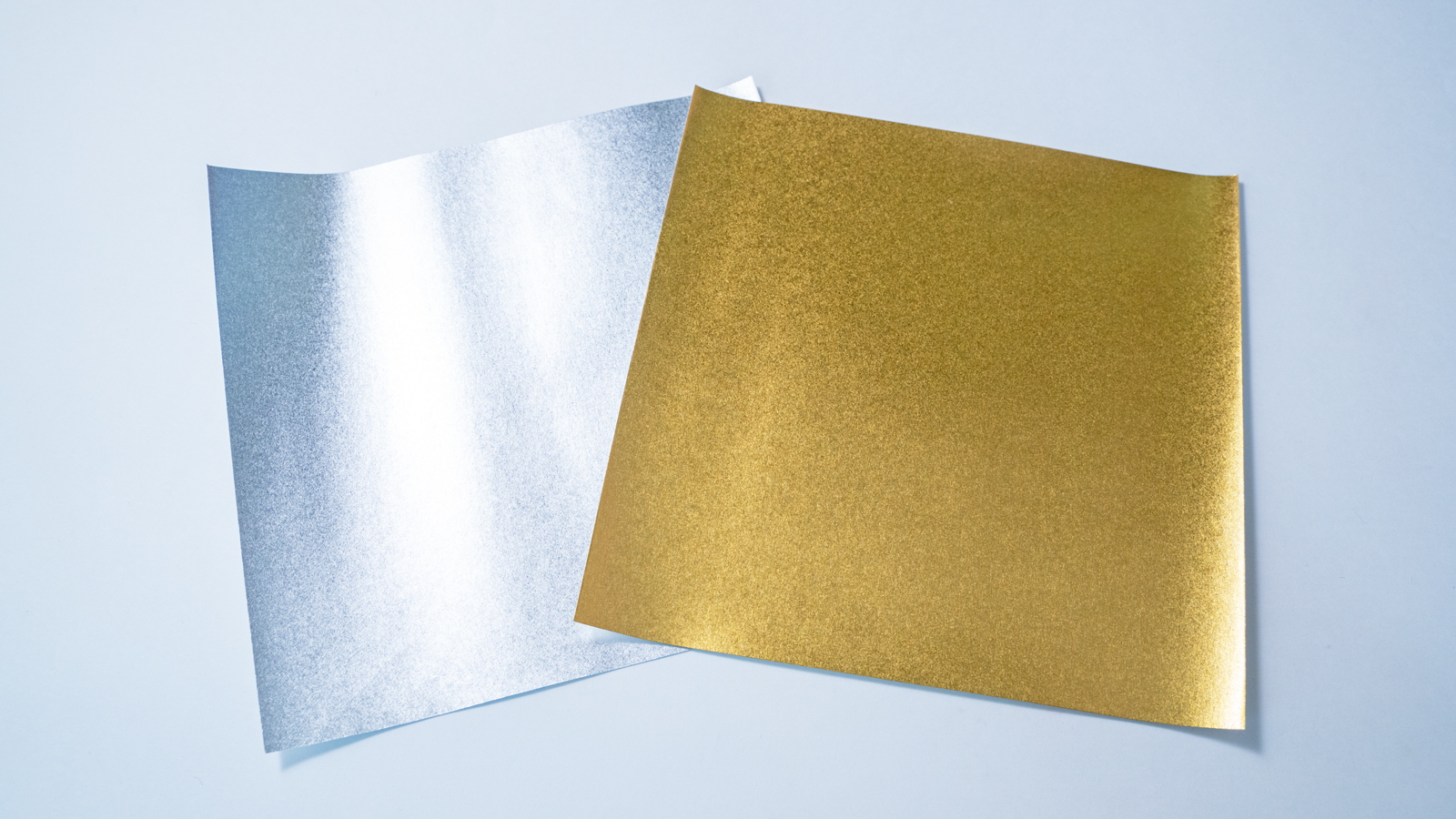
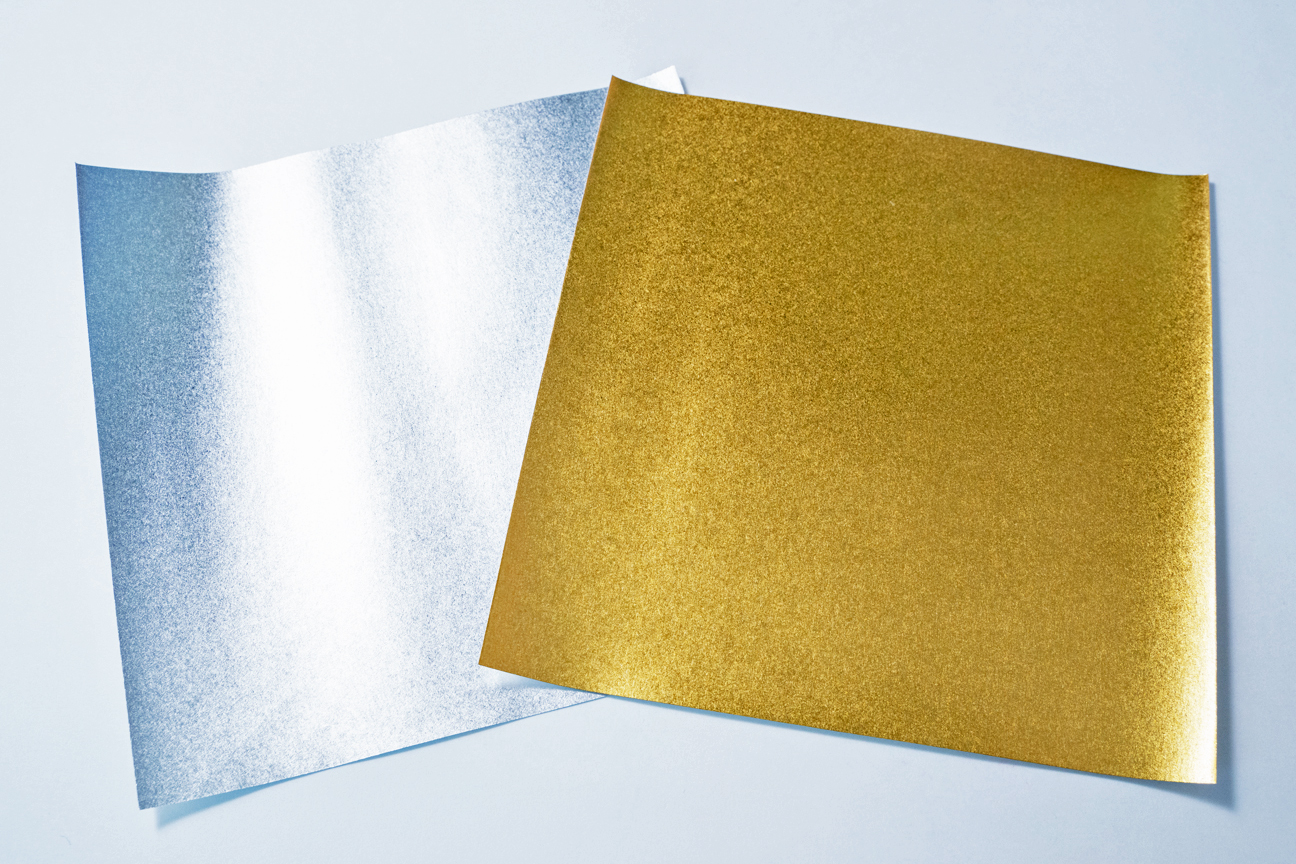
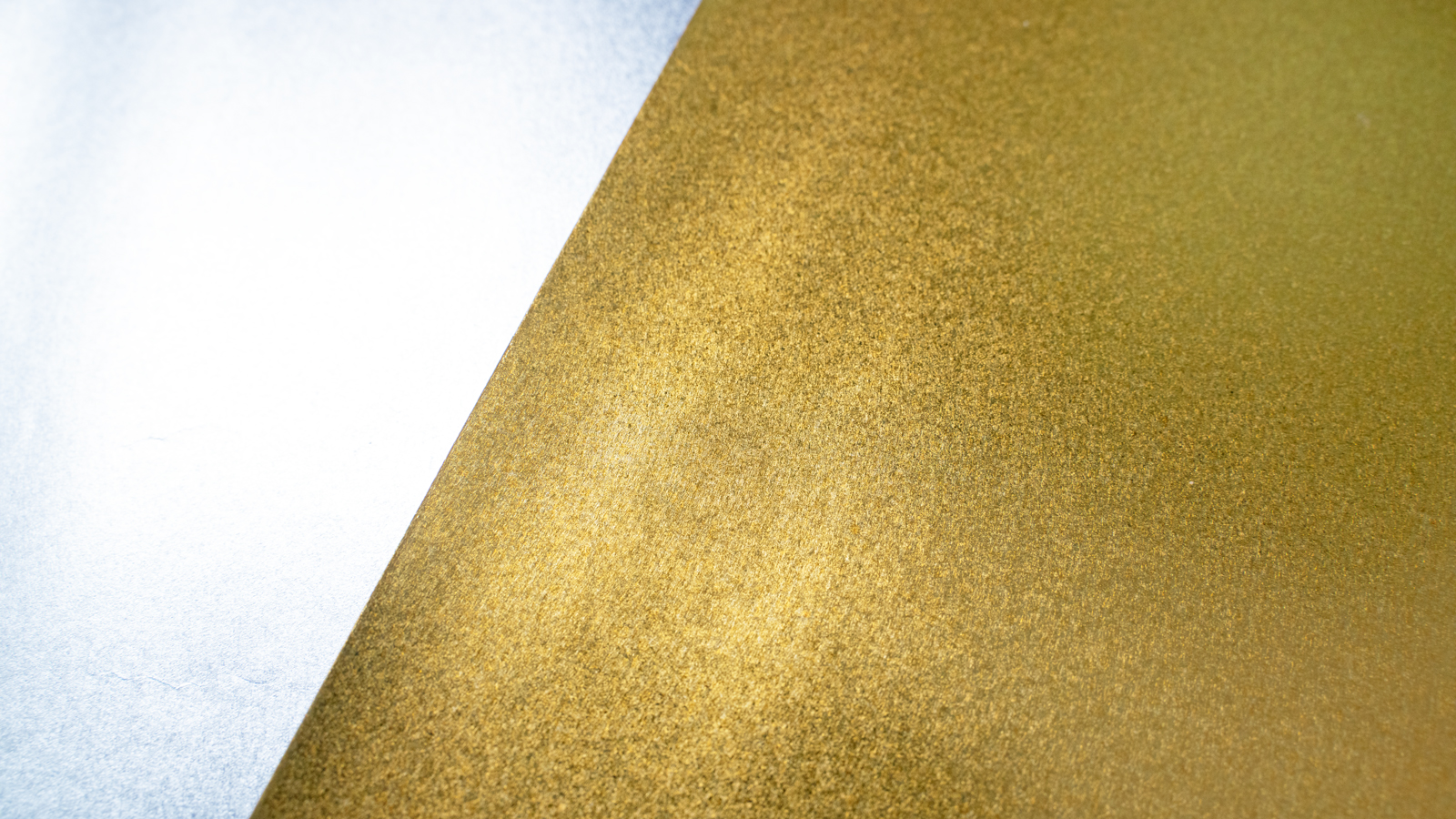
Hi-Pika E2F is an aluminum-vapor-deposited paper with a refined matte gold or silver surface and a white reverse. Unlike mirror-like foil, its metallic effect is restrained and slightly textured.
TAKEO lists several weights, beginning at approximately 64 gsm and 0.07 mm thick. The lighter grades are the most practical starting point for ordinary origami.
Why use Hi-Pika E2F?
- The metallic surface gives a model an immediate decorative presence.
- Gold and silver work well for festive and symbolic subjects.
- The white reverse can be incorporated into intentional color changes.
What should you watch for?
Rubbing and repeated refolding can reveal scratches or wrinkles on the deposited surface. Metallic paper can also create distracting reflections in photographs. Store it flat, handle the surface gently, and test the lighting before photographing the finished model.
Best for: festive cranes, New Year decorations, Christmas ornaments, stars, boxes, robots, insects, dragons, and geometric objects.
Works Made with This Paper
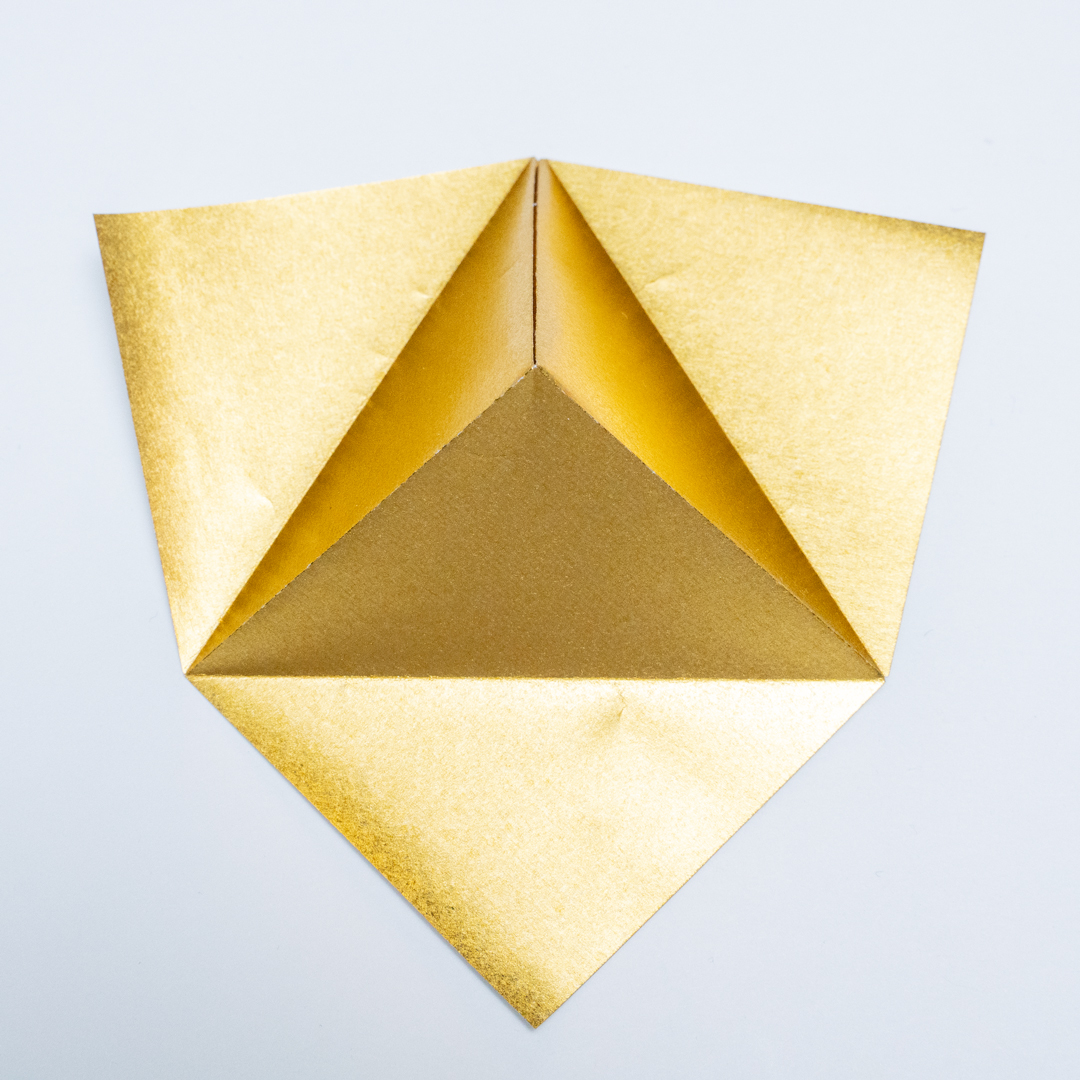
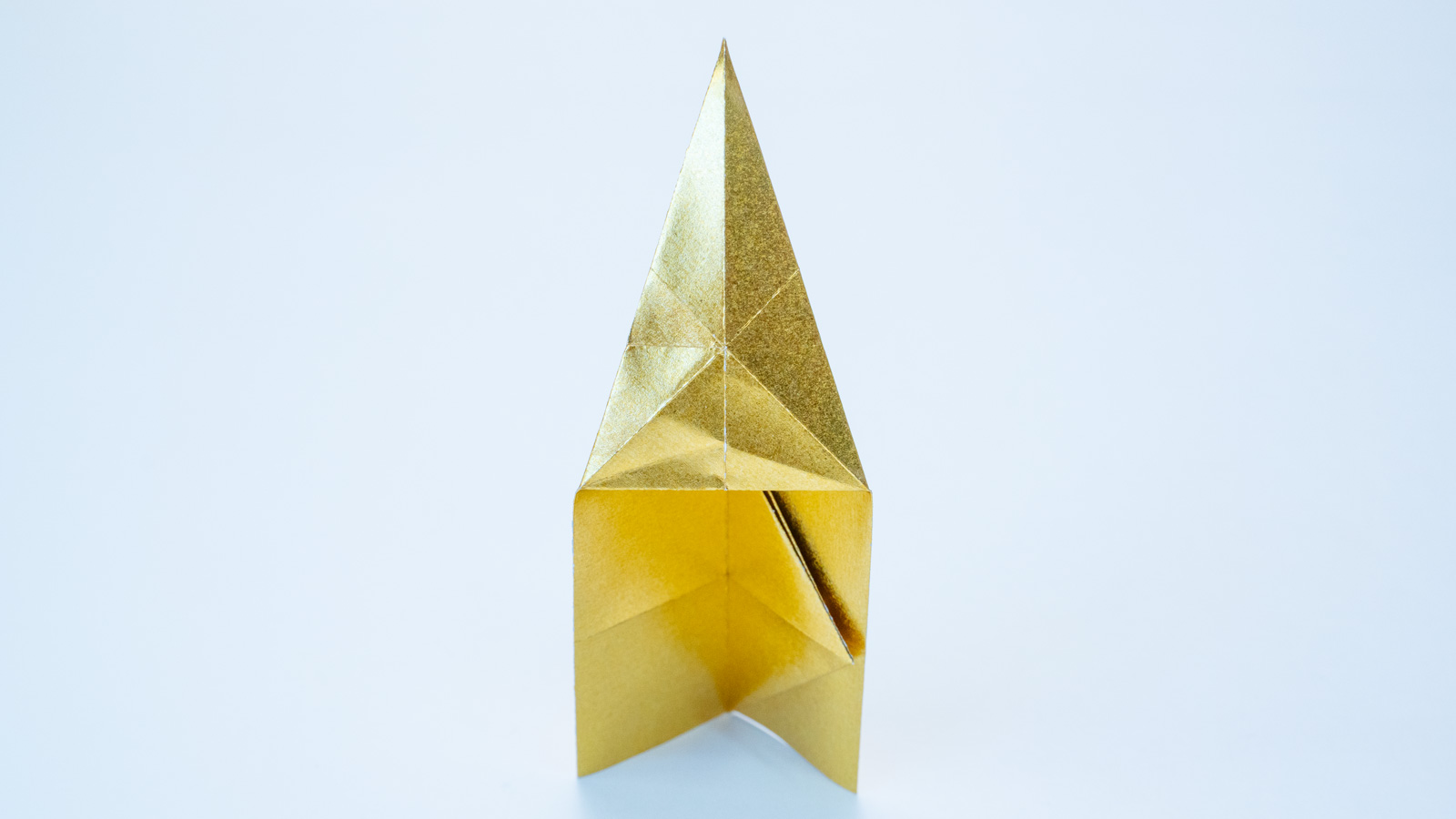
Obtuse Triangular Pyramid
A flattened triangular pyramid whose apex solid angles are all 90 degrees. It is used as a fundamental element for forming the vertices of cubes and rectangular prisms.
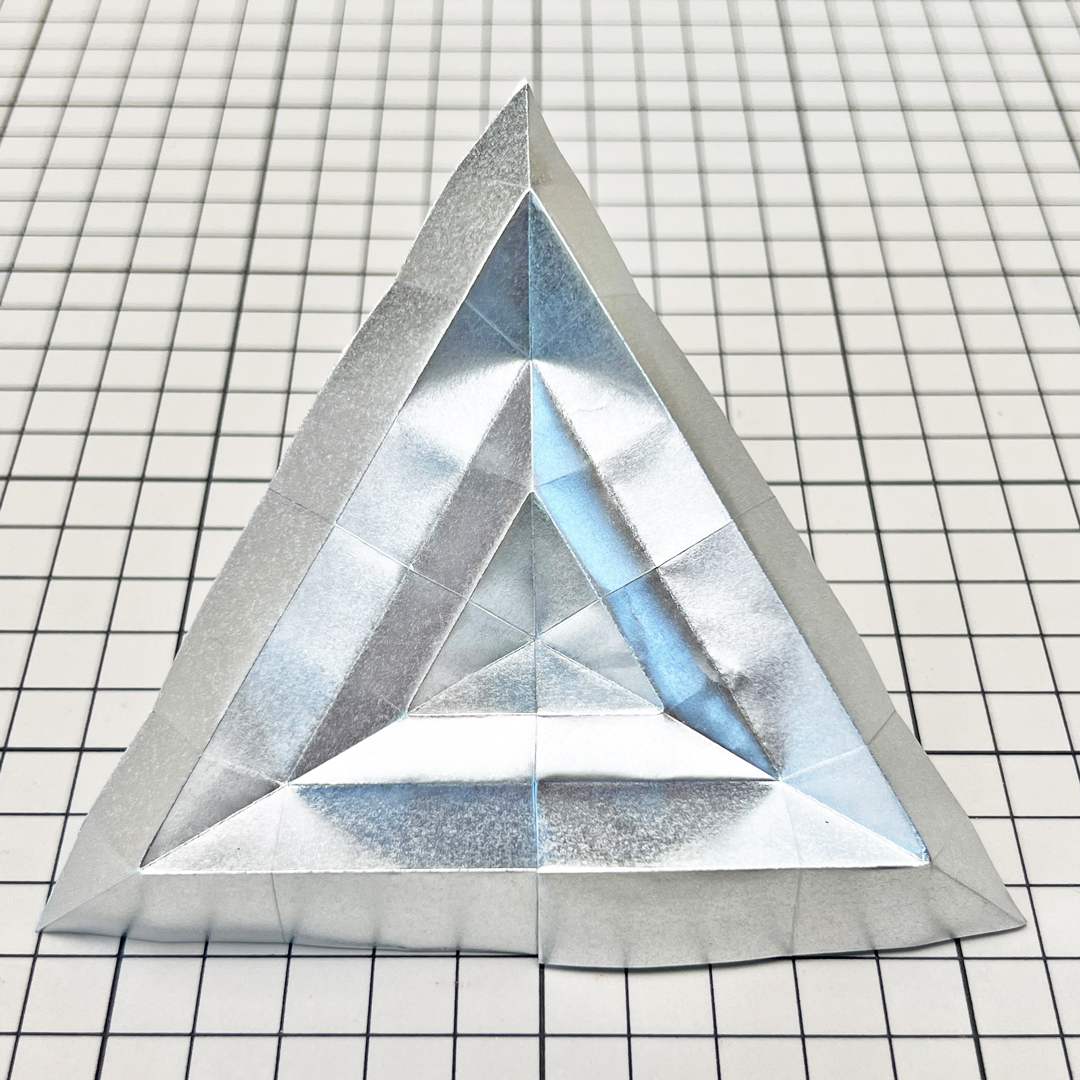
Collapsible Triangular Pyramid
A structure formed by vertically compressing an obtuse triangular pyramid using a three-dimensional sink-fold technique. The three-dimensional sink fold becomes a locked fold, resulting in a stable structure.
9. Ganpi Paper: Thin, Smooth Washi for Refined Detail
Ganpi paper is a type of washi made from ganpi fiber. It is valued for a dense, smooth surface and strength relative to its thinness. Colored and undyed sheets are available from specialist washi shops.
A well-made thin sheet can handle detailed folding without the same bulky accumulation produced by heavier paper. Its subtle luster also suits finished work intended for close viewing.
Why use ganpi?
- Thinness and strength support detailed folding.
- The smooth surface helps create refined, precise shapes.
- Natural fibers give finished models a distinctive character.
What should you watch for?
Ganpi paper is relatively expensive, and handmade sheets are not standardized origami products. Thickness, sizing, color, and folding behavior vary by maker. Buy or request a sample when possible.
Best for: detailed insects, animals, dragons, human figures, and refined display pieces.
10. Mitsumata Paper: Soft, Smooth Washi for Organic Forms
Mitsumata paper is washi made from the mitsumata plant. Compared with the crisp, dense impression often associated with ganpi, it can have a softer, warmer surface and a gentler folding feel.
This combination of softness and strength makes a suitable sheet attractive for curved or organic forms. As with other handmade papers, the exact behavior depends on fiber preparation, sheet formation, weight, and surface treatment.
Why use mitsumata?
- Its smooth, warm surface gives models a quiet visual presence.
- A thin sheet can support detailed folds without feeling harsh.
- Its softer character works well for shaped animals, flowers, and figures.
What should you watch for?
Do not assume that every sheet labeled mitsumata has the same thickness or strength. Handmade paper may contain natural variation, and large sheets must usually be cut square.
Best for: flowers, animals, figures, organic sculptural work, and understated display pieces.
11. Chiyogami: Patterned Paper for Decorative Models
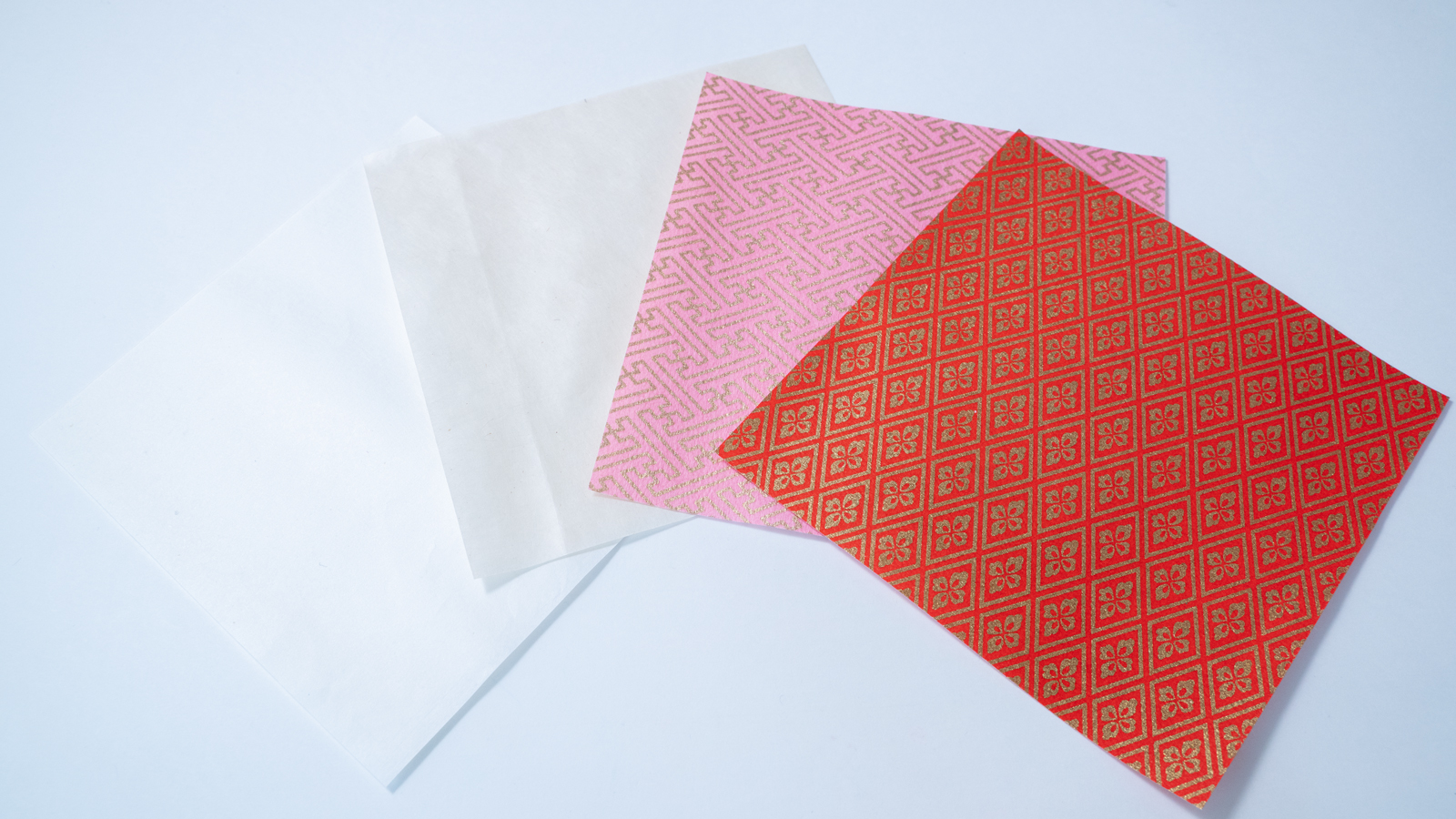
Traditional chiyogami is washi printed with decorative Japanese patterns. Today, the term is also used more broadly for patterned origami paper made from other paper bases.
Chiyogami is most effective when the model leaves enough surface visible for the pattern to be read. A simple crane, box, envelope, or seasonal decoration can become visually rich without adding more folds.
Why use chiyogami?
- Patterns create color, rhythm, and detail on simple forms.
- It is well suited to gifts and seasonal decorations.
- Washi-based sheets combine printed surfaces with natural paper texture.
What should you watch for?
Strong patterns can hide crease lines and make fine sculptural details difficult to read. Printed layers may also crack or scuff along sharp folds. Because “chiyogami” is used for several types of patterned paper, check the base material and weight rather than relying on the name alone.
Best for: cranes, boxes, envelopes, paper dolls, Hina and Tanabata decorations, gifts, and simple display pieces.
Works Made with This Paper
How to Choose the Right Origami Paper
When choosing between these papers, begin with the structure of the model rather than the color.
- Count the layers. If many layers gather in one area, prioritize thin paper.
- Consider the finished form. Boxes, broad planes, and freestanding objects need more body or stiffness.
- Choose a workable size. A complex model usually becomes easier when folded from a larger square.
- Decide how the surface should look. Texture, translucency, pattern, and metallic reflection can become part of the design.
- Test before committing. Fold a sample or a simplified version before cutting an expensive parent sheet.
There is no single best paper for every origami model. Kami is the most practical general choice, but exploring different materials changes not only the appearance of a model, but also the way it can be folded and shaped.
Paper selection is part of origami design. Once you begin matching the material to the structure, choosing the paper becomes one of the most creative parts of the process.
Sources
- OrigamiUSA, “Paper Review #12: Kami.” Accessed August 5, 2026.
- TAKEO, “First Vintage / First Vintage N.” Accessed August 5, 2026.
- TAKEO, “TANT Series.” Accessed August 5, 2026.
- TAKEO, “Mermaid / Mermaid-FS.” Accessed August 5, 2026.
- TAKEO, “t-Karape.” Accessed August 5, 2026.
- TAKEO, “Classico Tracing-FS.” Accessed August 5, 2026.
- TAKEO, “Hi-Pika E2F.” Accessed August 5, 2026.
- Ozu Washi, “A Variety of Handmade Washi.” Accessed August 5, 2026.